Why did trains crash in the night?

When a cattle train and a goods train collided in the early hours of a Saturday morning in 1901 near Orroroo, South Australia, the driver of the train responsible blamed dew on the rails.

The Walloway Railway Incident. Image State Library of South Australia

However, the Railway and the Coroner’s reports conflicted on the cause, and there was much debate both publicly and in parliament, about the incident.

The goods trains, loaded with flour and copper ore, was on its way to Port Augusta.

The cattle train, with 168 beasts on board, was meant to pull onto the siding of Walloway Station, about eight miles north of Orroroo.

But the brakes failed to pull up the train. The runaway train’s guard hung out his danger lamp, but a cutting and curve prevented those on the goods train seeing the signal.

Moments later, the “cattle train engine was thrown on its side down the embankment, and every part except the boiler was dreadfully twisted and battered”.

“Only two truck-loads of cows suffered damage. These trucks were splintered to atoms, and the cattle were mangled horribly. Although some were killed outright, others lingered on until they were shot on Saturday morning.”

The engine of the mixed train was not completely derailed, but the tender and four trucks piled upon it.

The rest of the train broke loose from the couplings, and slipped back for half a mile to Orroroo before coming to a standstill.

Ironically, the Commissioner of Public Works, RW Foster, was in that train’s one passenger carriage.

“At first they were unaware that the collision had occurred, and Mr Foster said, when the impact was felt “It is only some rough shunting. We are moving again.”

But they soon discovered their mistake.

The firemen of both trains had been killed and the driver of the cattle train badly injured, but no passengers were badly hurt.

Fireman Samual Eager is buried in Peterborough cemetery, South Australia.

Cattle train fireman Samuel Eager died instantly, although his body was not extricated for five hours.

Goods train fireman John Brodie, however, “met a most distressing death”, imprisoned under his tender and the four trucks, with one leg severed at the thigh and hanging outside the train.

“His removal was a difficult and painful task, but Brodie displayed wonderful fortitude, raising himself up on one leg and conversing with his rescuers.

“He lived for over two hours, conscious to the end.”

it was reported

 Driver Pennington, 47, of the cattle train, suffered an “ugly scalp wound and lost sight in both his eyes through steam burns”. Three years later a committee of his friends and workmates raised 176 pounds to help him out. The government also paid his medical expenses and gave a 300 pound gratuity.

No-one could decide who was at fault. Public interest was aroused to the point that the newspapers published the Coroner’s report and the railway Board’s conflicting verdicts, and called for an independent inquiry.

There was conjecture about whether the rails were wet from dew or rain, made slippery by grasshoppers or cow urine, whether Pennington had enough experience (he had travelled that particular route six times), and about the visibility of the train’s headlights. The Railway Board wanted to blame inexperience on the part of Pennington.

A monument has been erected by the Orroroo Goods Shed Heritage Group near the site to mark the centenary of the incident. It lays the blame on brake failure and gives some more details of the incident.

“Flour, ore and dead bullocks were scattered and mixed with smashed rolling stock. The injured stock were shot by Trooper Beinke of the Orroroo Rifle Club. Two young girls Nell and Bridget Kain, ran from their home nearby to give first aid and comfort to the injured men. Each of the girls later received a gold watch and chain from the South Australian railways in recognition of their brave and humane action”.

Peterborough

SOURCES:

Petersburg Times, Friday 13 December 1901 p 3

Border Watch,  Wednesday 20 November 1901 p 2

The Register, Friday 24 March 1905 – Page 4

If you are into poetry, here is an account of the incident, published in the Adelaide newspaper the Herald.

THE WALLOWAY ACCIDENT.

The following lines are taken from the Railway Standard, and are written by MJ O’Hair, of Quorn :—

The train sped into the darkness

That was as black as the depths of hell.

And the driver, blinded by-lightning flash.

The road could scarcely tell.

“We’re booked to cross at Walloway,

O God! what an awful night.

The rails are greasy, the bank is steep,

And there’s never a sign of a light.”

” Pull up! pull up! Good God !We’ve passed

And Haines is nearly due;”

Brave Eager struggled his train to stop,

But madly on she flew.

” Hang out your lamps.” What puny lights,

On such a night as this;

For a curve is lying between the trains.

As along the road they hiss.

With a roar like thunder, they come, they come,

Till they meet with a shuddering crash;

O God above! what an awful sight

Is a midnight railway smash.

Poor Eager lies dead, with his brake In hand.

And Brodie is pinned below;

With his leg cut off by the shattered wreck,

And stunned by the awful blow.

Poor Pennington is badly hurt,

And scalded by the steam;

While Haines knows nothing, so dazed is he.

That it seems like a hideous dream.

They sent for assistance, ’twas miles away.

And Brodie was dying fast;

“Oh, say good-bye to my darling wife.

For I soon must breathe my last.

” Tell her to watch my brother dear,

His parents both are dead;

They died together, when he was still

A baby with golden head.”

They laid him down, for his short young life

Had ended at Duty’s call;

Then they brought him home to his weeping

wife—

O God ! protect us all

Think of the cry of the widowed wife,

Think of the orphans’ call;

Think of the mothers who loudly wail

For their darling sons who fall.

Heaven protect us from a death like this,

On a dark and dreary night,

Out on a plain, in a lonely land,

With never a friendly light.

Out of your sorrow be kind, be kind

And pray for guidance from Heaven above

To the sufferers with weary load;

To the Men of the Iron Road. Nov. 19, 1901

Tall policeman not strong enough

Image: Sharyn Moodie

Coolgardie’s first-class constable William Ackerman Westrop died at midnight of consumption of the throat, a fairly popular way to die in the 1890s. The term usually referred to the wasting that accompanied tuberculosis.

His illness was blamed on “turning out at all hours of the night in attending to the prisoners brought in’’ to the lock-up.

“It is thought that it was during his holding of this office that the seeds of his fatal illness were sown,’’ reported the Goldfields Morning Chronicle.

 “For some months previous to the time when he took to his bed, he was repeatedly advised to lay up for a while, but he stuck to his post until the complaint had obtained a firm hold of him, and he was positively compelled to relinquish his work.

“As he was originally from cold, wet and windy Tasmania, you would think the six foot two inches ‘finely built’ man had a stronger constitution.”

Goldfields morning chronicle

He lies in the Coolgardie cemetery.

Coolgardie, Western Australia

SOURCES: The Goldfields Morning Chronicle, Tuesday 27 September 1898 p 2

The Golden Age,  Monday 26 September 1898 p 3

Kalgoorlie Miner, Monday 26 September 1898 p 4

Flash flood ended Henry’s gold fever

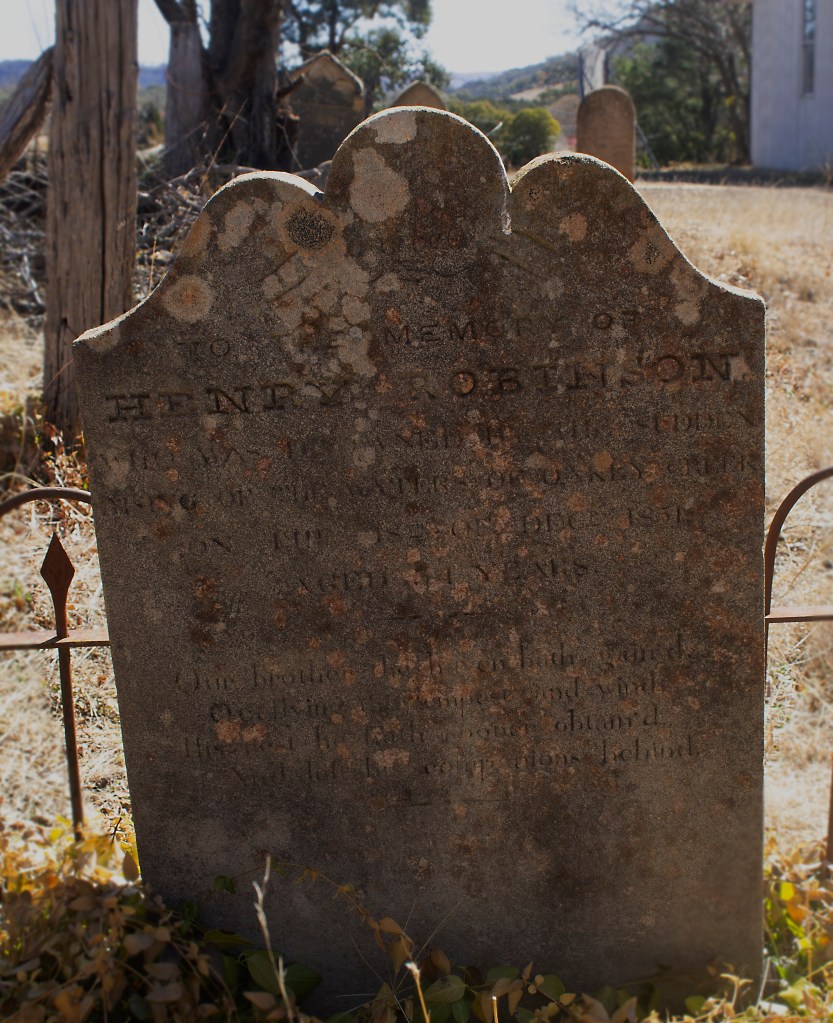
Anglican cemetery, Sofala. To the memory of Henry Robinson, drowned by the sudden rising of the waters of Oakey Creek on the 18th of December 1851. Image Sharyn Moodie

The words on this headstone in the overgrown abandoned Anglican cemetery at Sofala are almost unreadable, worn by time and overgrown with lichen.

The grave’s occupant, Henry Robinson, was lost to the waters of nearby Oaky Creek, just as the stone itself is now being lost to the elements.

How long before his story also dissolves into the past?

Earlier that year, 1851, the first payable gold in NSW had been found at nearby Ophir, and Robinson was part of the resulting rabid rush to get in on the action

The Turon goldfield where he died had only opened in June, with initial concerns about lack of water proved unfounded by the later flooding.

The reporter who told of the death of Henry Robinson by flash flood, saw himself the waters of the Turon River rise rapidly where it meets Oakey and Little Oakey Creek, not far out of present-day Sofala.

Thunder, rain and hail on the nearby mountains resulted in a deadly gush of water hitting the area, the water rising 12-15 feet in 15 minutes.

 “The miners were rushing up the banks of the river in all directions, and but few near this spot had the opportunity of saving their cradles and mining implements,” the observer said.

 “The waters were rushing down like an avalanche, and removing in their furious progress the trunks of large trees, enormous masses of rock, and almost everything which came within their reach.’’

 Shipping captain Henry Robinson (who formerly had command of one of the Sydney coasters), was working with two other men in a tunnel on Little Oakey Creek, about a quarter of a mile from its junction with the Turon River.

 The unfortunate Captain Robinson was swept to the junction and another 500 yards down the Turon River.

The reporter saw his bruised body being taken from the water.

“No part of his clothing remained excepting a leather belt.’’

His workmate Richards was thought to be still in the tunnel, and men were soon  busy digging to find his remains.

“It may seem strange to those who have never witnessed the effects of these mountain storms, but the great rush of waters seemed to pass this point so as to remind one of an immense train of railway carriages at full speed, and the waters of the Turon receded to nearly their usual height in about half an hour.’’

The gold rush then returned to normal.

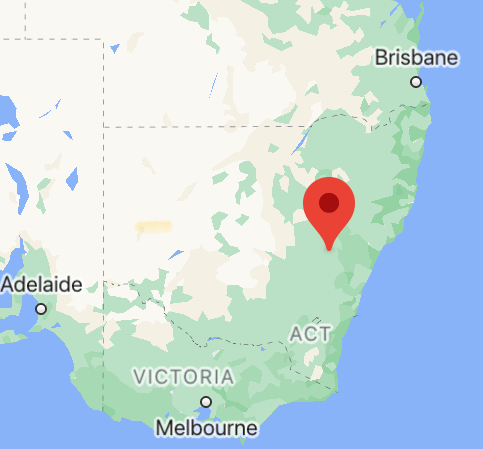
Sofala, NSW

SOURCES: The Sydney Morning Herald,  Tuesday 23 December 1851 p 2

Turon River goldfields and Sofala (map) viewed at https://www.heatgg.org.au/turon-river-goldfields-and-sofala/ on 15/4/2021

Expert dies of cyanide poisoning

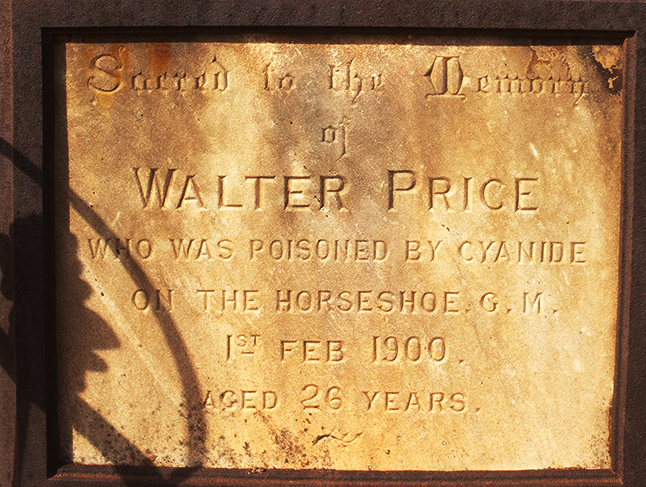
Young Walter Price, 26, accidentally inhaled the fumes of the cyanide plant at Horseshoe Mine at Kalgoorlie, Western Australia.

Death by cyanide wasn’t an uncommon occurrence in the goldfields, less than a decade after the major WA goldrush began, given its essential use to extract gold from rock.

What was unfortunate is that Walter’s profession was described in the newspapers as “cyanide expert”. This may have been the title of his role, rather than a reflection of his accreditation.

Article image from the National Library of Australia’s Newspaper Digitisation Program

Same man, reported to be working at different mines, although the plants were later owned by the same company.

His death prompted calls for antidotes to cyanide poisoning to be kept at cyanide mills, and for accident wards to be set up at mining centres. Little action was taken.

‘To have to deal so frequently with abuses of this sort is monotonous, but absolutely necessary in a community so utterly apathetic and reckless as the the miners of the Boulder’

said one correspondent

 “Warning after warning is given and untimely deaths are recorded with unvarying regularity, yet no step is taken to demand the provisions for prevention which are made by every other civilised community”.

Price is buried in the fascinating Kalgoorlie cemetery, amongst scores of other graves citing deaths at mines.

Images: Sharyn Moodie
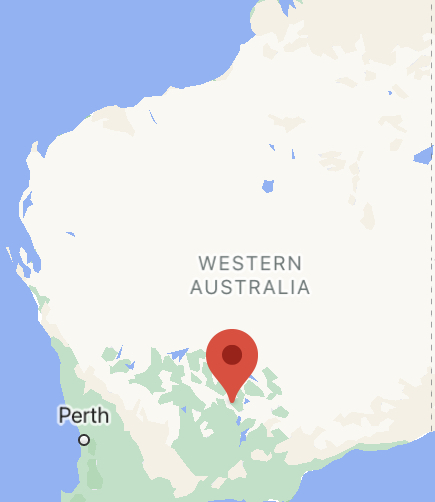
Kalgoorlie, Western Australia

SOURCES:

Australian Town and Country Journal (Sydney, NSW : 1870 – 1907) Saturday 10 February 1900 p 26

The Evening Star (Boulder Thursday 1 February 1900 p 3

The Sun (Kalgoorlie) Sunday 4 February 1900 p 4

 Murchison Advocate Saturday 3 February 1900 p 3

Paddle boat captain suicides after losing wife and son

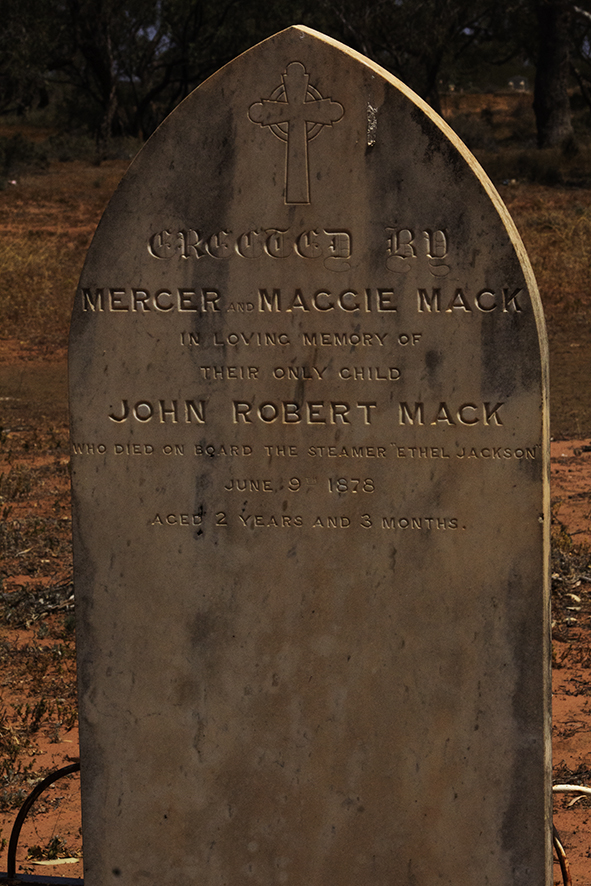
The dry desolation of the Wilcannia cemetery in outback New South Wales is a sad resting place for two-year-old John Robert Mack.

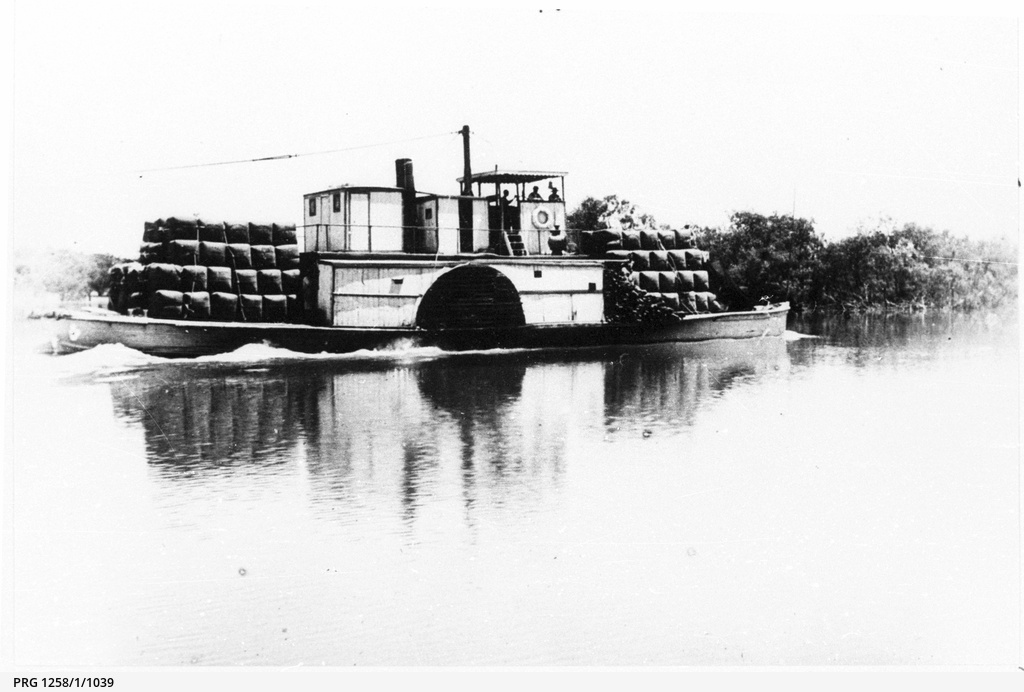
He died on the paddle boat Ethel Jackson as it steamed along the Darling River on  June 9, 1878. At the time the boat was the flagship of the McCulloch Company which employed John’s father, Captain Moses Mercer Mack.

While it is unknown how little John died, it seems to have been the beginning of a trail of tragedy for his dad Mercer.

He and John’s mother Maggie had married four years earlier in 1874, when she was just 18 and he was about 44.

Mercer was later publican of the Echuca Hotel, where Maggie died aged 24 in 1880 (she is buried in the Echuca cemetery).

He carried on, later being elected president of the Master Mariners’ Association and then holding  the position of Marine surveyor at Echuca up to a few months before his death in 1883, when he resigned and managed a mining claim.

The Ethel Jackson in the 1890s, Courtesy of State Library of South Australia

Newspapers reported a “most determined suicide,’ when he took his own life in November 6.

They said he had been despondent since being relieved of his position managing the mining claim, but it appears he had not been of right mind for some time. It was claimed that he drank heavily and had suffered a severe sunstroke which affected his health.

He had been living at the Pastoral Hotel in Echuca and left a letter and his jewellery for the licencee J Johnson.

The letter included two miner’s rights, and a paper transferring his property.

The letter said:

“Dear Johnson – When you receive this I will have known the grand secret. I can’t bear to live any longer. I have been out of my mind this last month  – sometimes right for a little while, then all in a fog.

My head is gone. I am living in misery. They say it is an awful sin to kill one’s self. I think it is more so to live on sinning…

…God bless you all.  Farewell. Mercer Mack.”

The letter was handed to the police, who were about to take out a warrant for Mack’s arrest as a lunatic – in those times anyone who could no longer manage their own affairs could be arrested and sent to gaol or hospital.

But then news was received that his body had been found near the pound with the head almost completely blown off. Apparently it had been the equivalent of Guy Fawkes night, and the gunshot had not been heard, or recognised for what it was.

 A double-barrelled gun was found beside the body, one barrel being discharged. Portions of the skull were found nearly 20 yards away, and fragments of the brain were scattered in various directions, as the newspapers duly reported.

The reported cause of death was suicide while suffering a fit of insanity probably caused from the effects of sunstroke.

The little Mercer family was no more. Mercer does not appear to have been buried with either his wife or child.

Wilcannia NSW

SOURCES:

Murray-Darling steamboat people, viewed at Wikipaedia, https://en.wikipedia.org/wiki/Murray%E2%80%93Darling_steamboat_people

State Library of South Australia PRG 1528/1039

The Riverine Grazier  Wednesday 19 June 1878 p 2

The Riverine Herald  Tuesday 7 September 1880 p 2

 The Riverine Grazier Saturday 10 November 1883 – Page 2

The Telegraph Wednesday 7 November 1883 – Page 2

Horses hasten men’s end

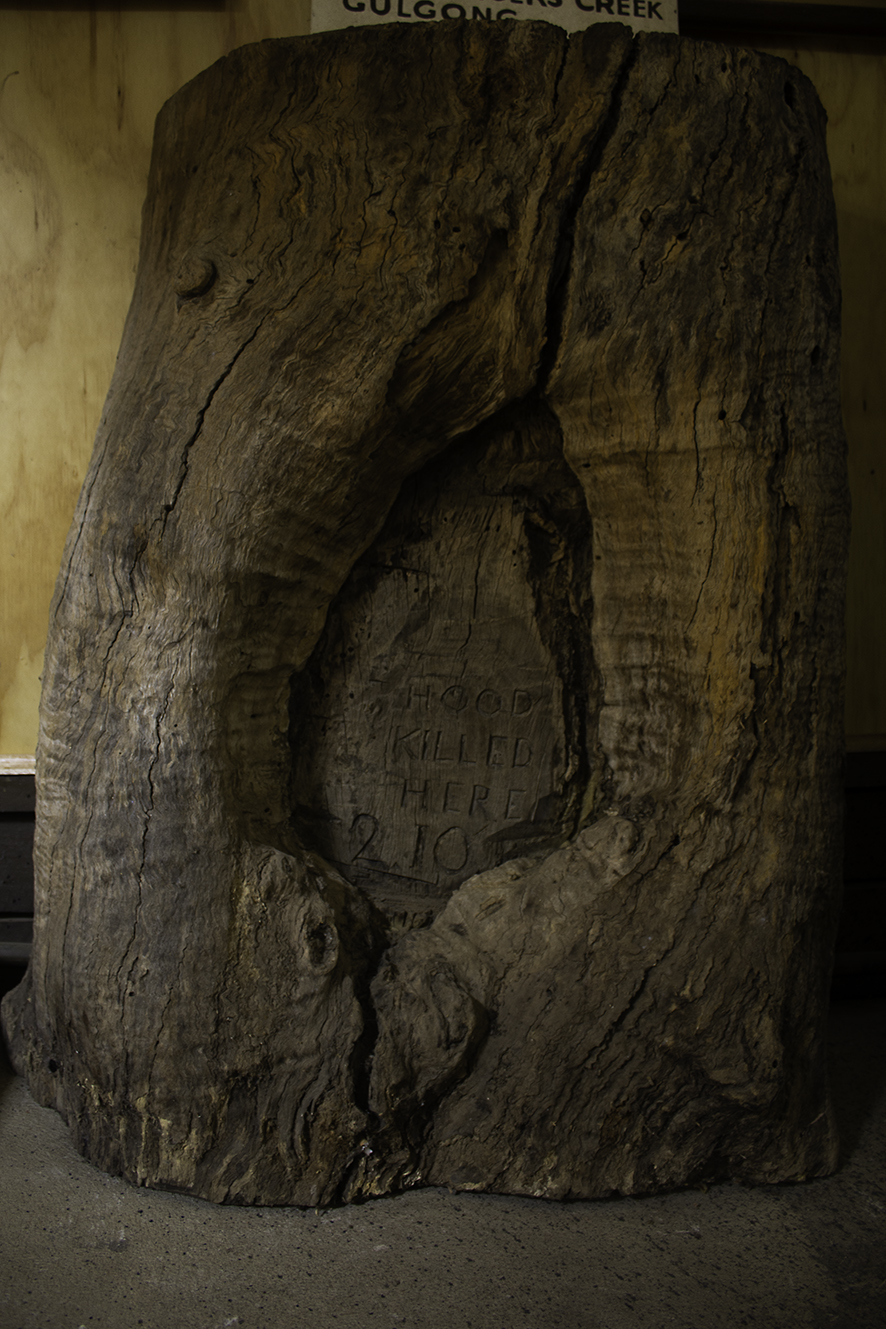
No-one saw Thomas Hood, driver of the mail coach from  Mudgee to Wellington in rural NSW, get kicked in the face by a horse, but the mark of the shoe was plainly visible on his face.

Death-by-horse was a reasonable common occurence in early Australia, particular as horses were essential for transport of people and goods.

For many, they turned out to be a fatally unreliable way to get from A to B, particularly for Thomas Hood and three other men who were killed in rural New South Wales, in separate incidents.

A stump which once stood alongside the place where Hood died is now in display in the Gulgong museum.

In 1912, Thomas Hood’s arm was broken above the elbow, and his skull fractured when he was killed between Ballara and Spicer’s Creek.

His body was found after a man waiting for the coach at the bottom of the next rise saw the horses galloping with no driver. 

He stopped the horses, and, going back, found Hood lying dead on the middle of the road.

An examination of the coach showed that the clip under the carriage was broken, and it was surmised that Hood leaned over to see what had happened when one of the horses kicked him in the face.’’

Dashed against a post

While it is unknown where Hood is buried, at least three other Gulgong Cemetery headstones are related to horse-caused deaths.

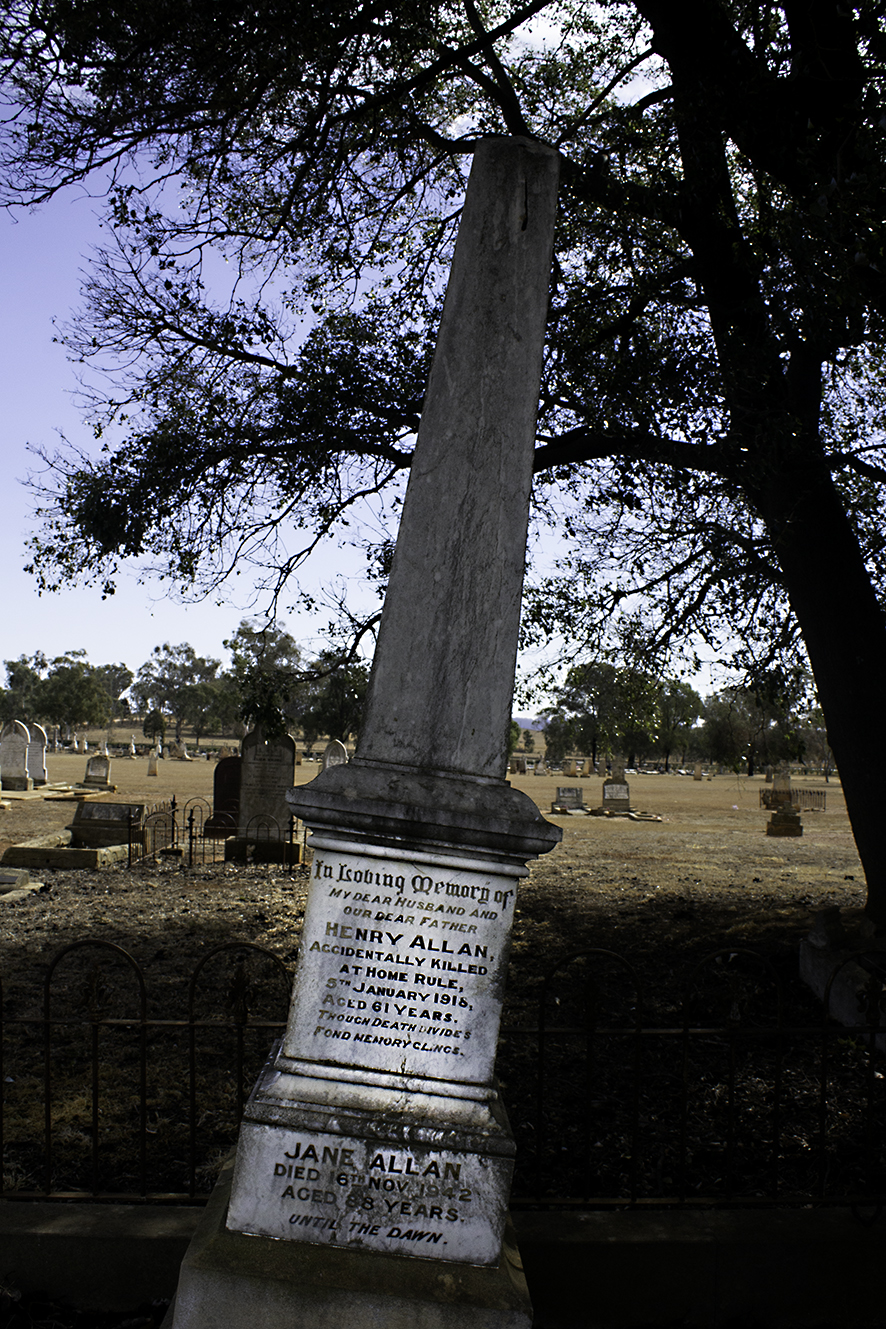
Henry Allen, a 61-year-old Gulgong region farmer, had just unloaded a load of wheat from a horse-drawn lorry. He had brought it from his home a mere 200 metres away.

The horses took fright and bolted for home.

Allen jumped on to pull up the horses, but having no luck, decided it would be safer to jump off.

It wasn’t. He was thrown against a telephone post, fracturing his skull and dying immediately.

 He left a “sorrowing widow”, not named, and four sons, one of whom was on active service (Private Wilfred was a schoolteacher off fighting in the war. He had returned home wounded in the left hip and thigh by June that year – 1918).

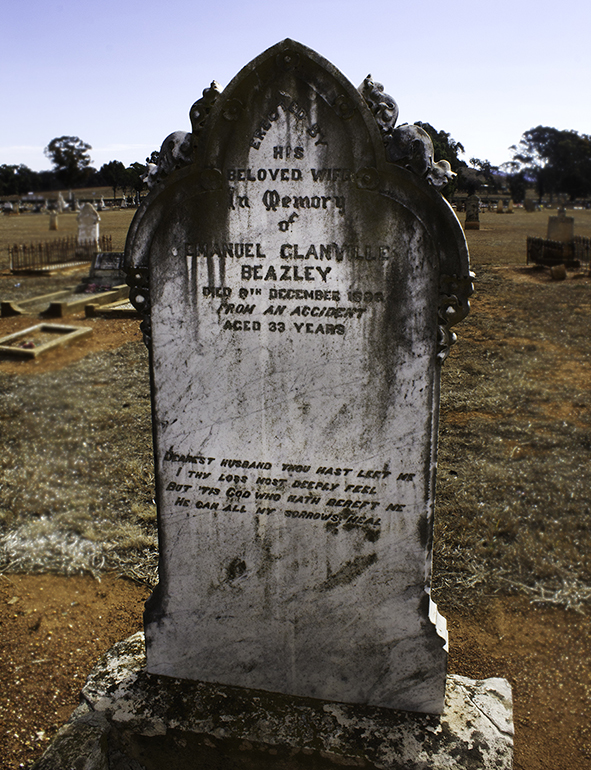
There are fewer details known about Emanuel Beazley, a 30-years-resident of the district, except that he had his leg broken by a horse wagon passing over it in 1896, and died two weeks later in the Gulgong Hospital.

Bucked off a horse

Another gravestone in Gulgong cemetery, as the result of a horse accident.

Thirteen-year-old schoolboy Leo Smith was considered a good rider for his age. When he was late home on a Friday afternoon, his mother went searching, and found his pony.

Not long after, she and his uncle found him dead, with only an abrasion to his right knee visible. Unfortunately, his neck was also most likely broken.

 Marks on the ground showed where the horse had bucked near the railway tracks at Home Rule, and Leo’s hat lay nearby.

Died doing horseback duty

David Peter Thompson, was a first-class constable in the mounted police.

David Peter Thompson died from injuries received on duty at Binnaway, on 20-6-1880 aged 32 years. His decaying headstone lies in the Coonabarabran cemetery.

He was at the Binnaway racecourse on the Queen’s Birthday, presumably working.

His horse dashed him against a tree, partially fracturing his skull. He took a month to die, and his funeral was ‘very largely attended’.

An eloquent tribute

William Kerr who was killed by a horse September 7 1870

While William Kerr’s weathering gravestone in the Coonabarabran cemetery is a solid tribute to the man, the descriptive newspaper report of his death is also worth some admiration.

The flowery language of the time tells the tale.

“It is my painful duty to record one of those melancholy and fatal accidents which too plainly remind us that “in the midst of life we are in death.

“On the morning of Wednesday last, one of our most respected townsmen, Mr William Kerr, was hurried violently before the tribunal of his Almighty Judge, without having scarce time to call for mercy, so terribly sad was the awful event which caused his death.’’

It goes on to explain that Kerr was catching a young horse in a small paddock near his house.

The halter which had been put on him the evening before had slipped off his head and on to his neck.

 “As it was impossible to manage the animal by the short halter round his neck, Mr Kerr proceeded to tie the end of the catching rope to the halter, inadvertently leaving the other end of the rope, which had the usual catching noose fixed on it, trailing on the ground, when this was done, while trying to readjust the halter the animal plunged violently, breaking away, the noose of the rope catching the  unfortunate man’s leg just above the ankle…

He was of course thrown with terrible violence to the ground, and in this manner dragged about a distance of one hundred yards, over logs and against saplings.

The Maitland Mercury and Hunter River General Advertiser

“The infuriated animal at this point having stopped, the boy who had been assisting Mr Kerr managed to extricate his leg, when he was removed to the house in a state of insensibility, the blood oozing from his mouth, ears, and nostrils.

“Death put an end to the poor man’s earthly sufferings in a few hours; he never spoke nor showed any sign of reason from the moment that he first fell.

“William Kerr … was a man of very quiet persevering, and obliging habits, and his melancholy end has cast a gloom over the neighbourhood.”

Horse collided with cow

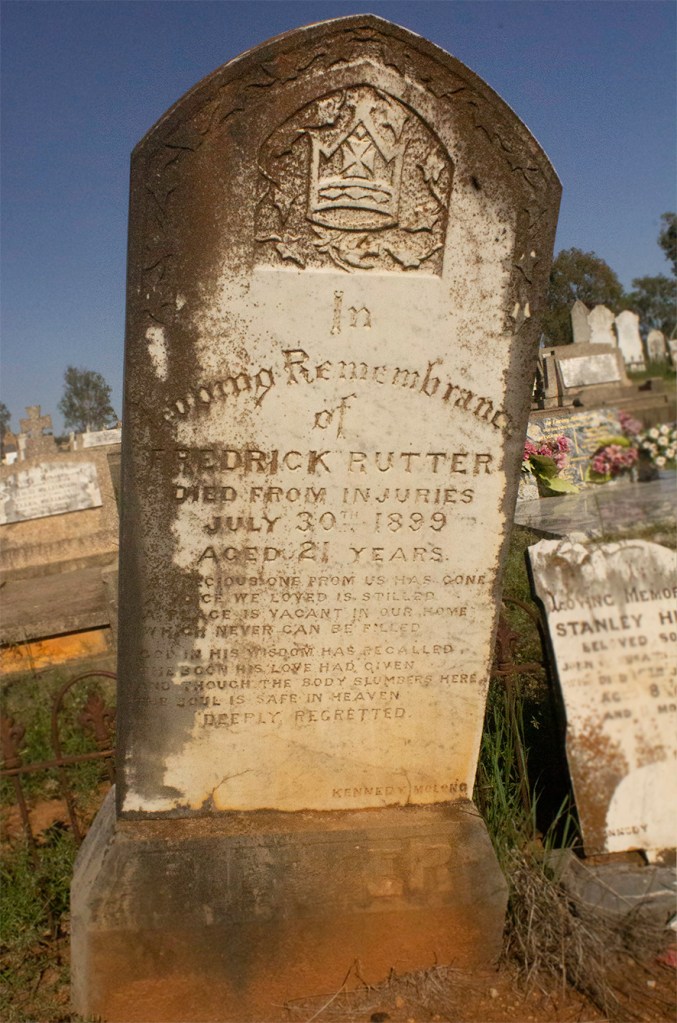
Fredrick Rutter died from injuries July 30 1899, aged 21. Molong cemetery, NSW

Fred Rutter, 21, was trying to wheel a cow, but his horse collided with it.

The result was the horse fell on Rutter, breaking his spine.

He was taken to hospital, but died at midnight.

.

.

.

.

.

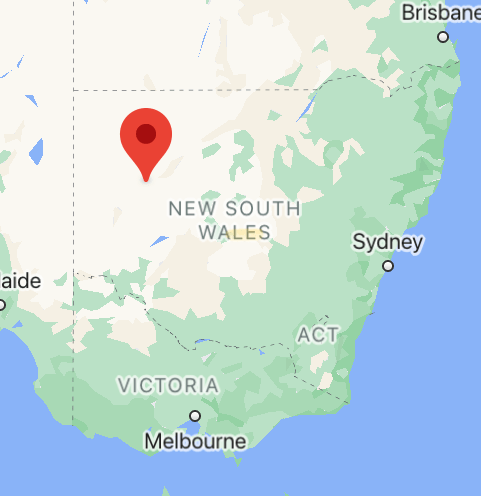
Gulgong, NSW. Coonabarabran is about 156km north of Gulgong

SOURCES:

Australian Town and Country Journal  Saturday 10 July 1880 p 26

Dubbo Dispatch and Wellington Independent,  Friday 4 October 1912, p 4

Mudgee Guardian and North-Western RepresentativeMonday 7 January 1918, p 2

Mudgee Guardian and North-Western Representative  Thursday 19 March 1914 p 7

The Sydney Morning Herald,  Thursday 10 December 1896, p 5

The Maitland Mercury and Hunter River General Advertiser, Tuesday 13 September 1870 p 4

Western Champion,  Thursday 10 October 1912, p 4

Western Champion Friday 4 August 1899 p 6

Good deed goes fatally wrong

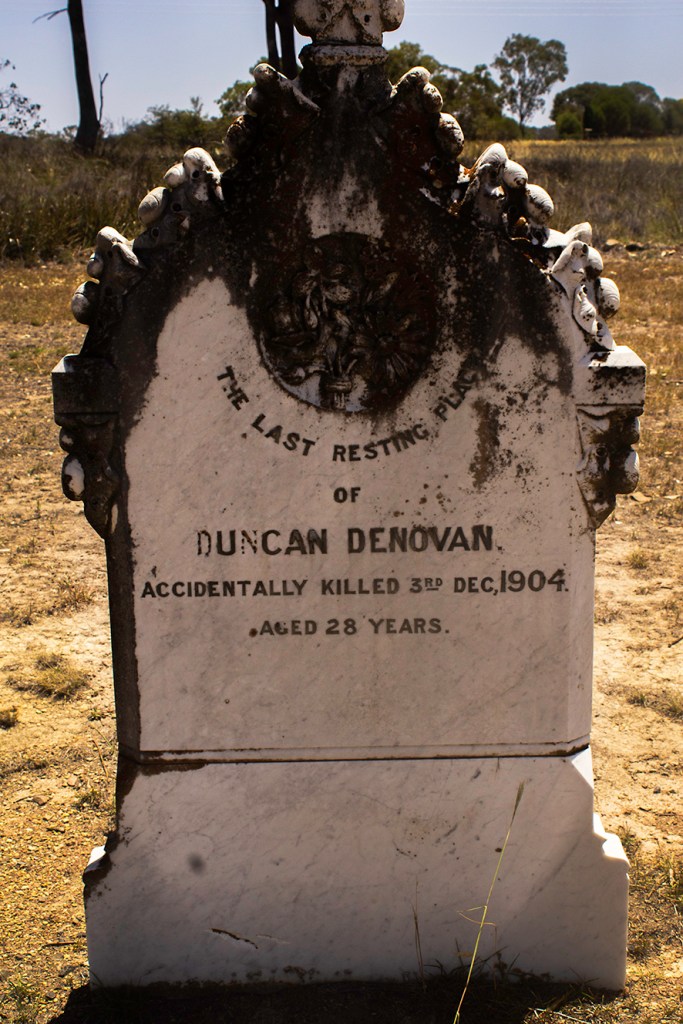
Young Duncan Denovan, a contractor for Wellington gasworks, was out shooting rabbits near Stuart Town in mid-western New South Wales on a Thursday evening in 1904 when he  came across the body of a man floating in the river.

Duncan Denovan is buried in the dry Stuart Town cemetery

 He secured the body and borrowed a horse, heading to Stuart Town to inform police.

He didn’t arrive until almost midnight, so it was the next morning he set off with the police to the scene of the discovery.

As they were getting close, Denovan galloped ahead, apparently intending to call into his campsite first.

However, he didn’t get far before his horse threw him into a tree, killing him.

“The police had a very unpleasant task in dealing with the man found in the river, and to see their informant killed whilst assisting them must have been a sad experience indeed’’.

wellington times

Duncan had only recently come to Australia from Scotland.

The coroner returned a finding of “accidental drowning” in the death of drowned man, William Smith.

Stuart Town, NSW

SOURCES: Molong Argus Friday 9 December 1904 p 5

Wellington Times  Thursday 8 December 1904 p 4

Jockey predicted his own death

Jockey John J Evans had a premonition that he would not make it through the day of racing at Coolgardie on August 11, 1901.

He was right. His mount, Arthur, refused to rise at the first obstacle in the first race of the second day of the sixth Coolgardie Cup, the hurdle. It crashed into the hurdle, throwing John.

 He was taken to the Coolgardie Hospital and did not regain consciousness before dying about 6pm.

An inquest heard that 25-year-old John had told his mate he would not get over the first  jump.

A large number of racing officials, stewards, jockeys and townspeople followed his remains as they proceeded to the Coolgardie cemetery soon after.

Coolgardie, WA.

Eighteen years later on the other side of Australia, a run of bad luck at the races finished for Norman Alfred Kimmorley when his horse also took exception to the race.

Goondiwindi cemetery. Image: Sharyn Moodie

Kimmorley was riding a horse named Mody in a pony race, when the horse swerved off the course. As he tried to get it back on the track, he collided with a guide post, striking his head and knocking him off the horse.

The local schoolmaster gave first aid, but Norman did not regain consciousness.  His neck was broken.

The newspaper reported “the unfortunate youth on Saturday had met with an accident while riding in a race at Boomi”.

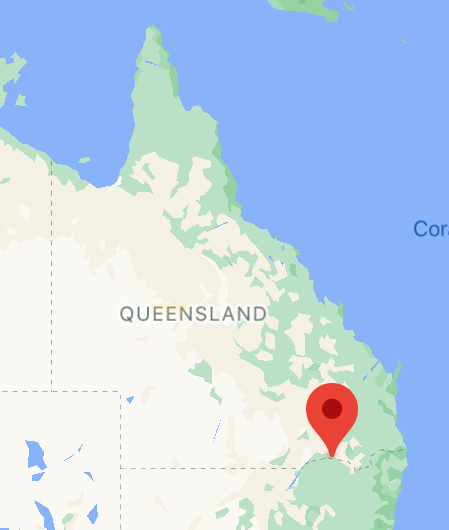
Goondiwindi, Queensland.

SOURCES: The Brisbane Courier, Wednesday 3 April 1929 p 5

Western Mail,  Saturday 17 August 1901 p 52
Kalgoorlie Miner  Monday 12 August 1901 p 8

Paddle steamer accidents often fatal

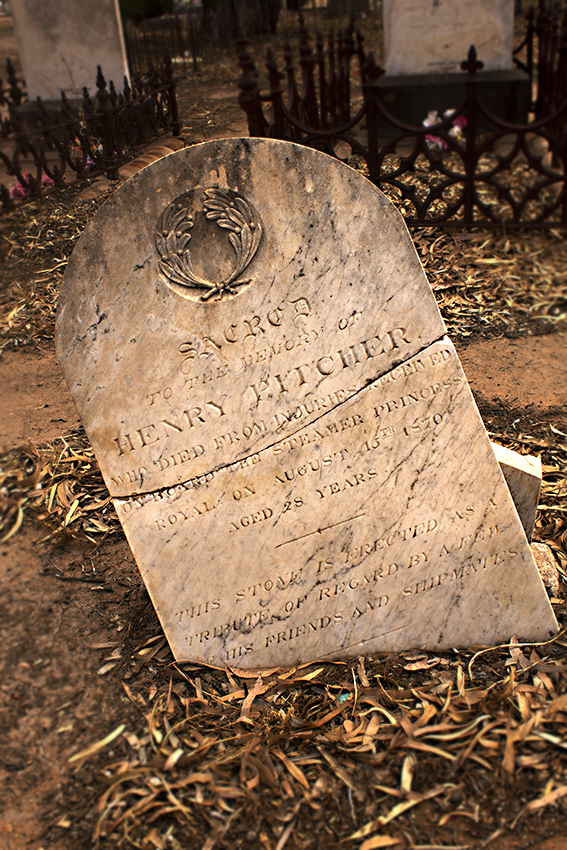
Henry Pitcher, who died from injuries received on board the steamer Princess Royal August 15, 1870. His broken headstone is in the Bourke cemetery. Image: Sharyn Moodie.

Steam paddle boats accidents were common and often fatal on the rivers of inland NSW, prompting this scathing opinion in the press by an unnamed correspondent.

It followed the death of 28-year-old Henry Pitcher on board the steamer Princess Royal on August 15, 1870 – the same year the vessel was launched.

“As the Princess Royal arrived at Bourke, its engineer Henry  Pitcher,  in stopping or reversing the engine, by some means got his foot and leg drawn in between the cogwheels of the machinery, and it was literally crushed to pieces before he could be extricated from his agonising position— he died a few hours afterwards.

The Princess Royal was later renamed the Monada, and continued to ply the waters of the Murray River until it was dismantled in 1944. Courtesy State Library of South Australia [PRG 1258/1/2713]

 “A few weeks before a servant girl taking passage on the  steamer Jolly Miller had her clothes caught by  the machinery as she walked along the deck,” it continues.

“She was drawn in by it, and the flesh torn from her body in a most fearful manner — if she recovers she is ruined for life.'”

unnamed correspondent, mount alexander mail

The writer cited further cases.

“The year before last the engineer of the steamer Murrumbidgee had his arm crushed/and torn from his body by the cog wheel machinery in the same manner, and most of us remember how a lady passenger (Mrs Cotter) some few years back was caught by the clothes, and crushed to death in the machinery of one of these river boats.”

 “These are only a few of the accidents which occur in these river boats, independent of the lives lost by falling overboard in consequence of the want of sufficient guard or bullwarlks round their sides.

“ In all the cases I have mentioned, I have very little hesitation in saying that if proper precaution had been taken by boxing in or covering over this dangerous description of machinery, these horrible accidents would not have happened.”

He called for safety inspections on boats coming in from South Australia.

The Princess Royal was one of about 300 paddle steamers which operated on the Murray-Darling system during their heyday between the 1860s and 1910s.

They were vital to the survival of stations and towns, bringing food, mails and passengers and taking out livestock.

Bourke, NSW

SOURCES:

Environment SA news, River Murray paddle steamers gain historic shipwreck status viewed at https://www.environment.sa.gov.au/news-hub/news/articles/2019/01/river-murray-paddle-steamers on March 15, 2021.

Mount Alexander Mail Wednesday 14 September 1870 p 3

Little Alice went out to play

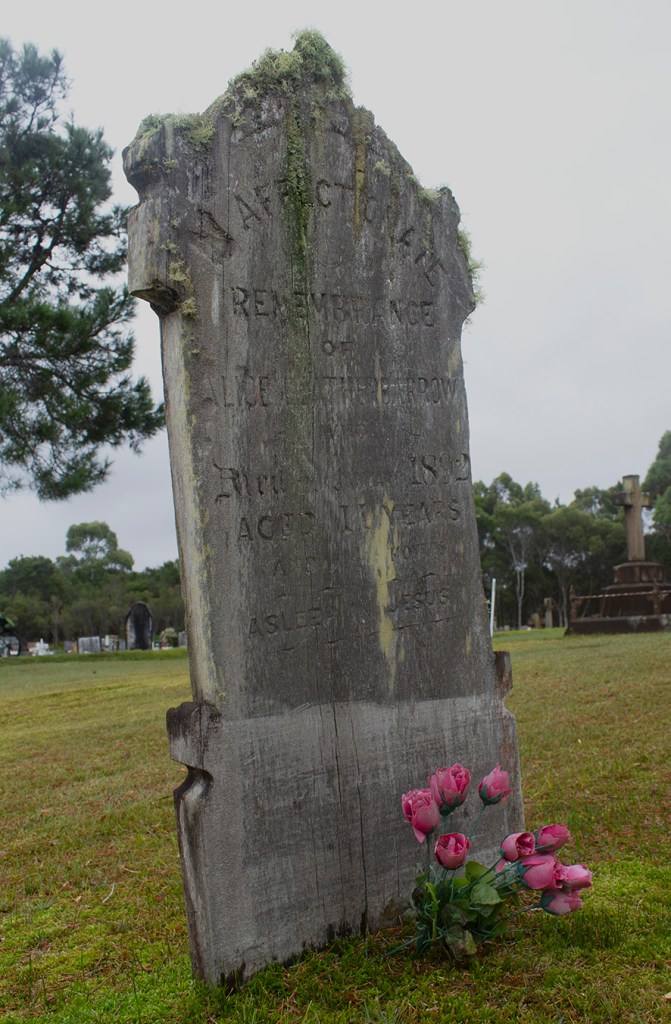
A weathered moss-adorned wooden grave marker tilts slightly towards the horizon at the Strahan cemetery, high on a hill overlooking the water.

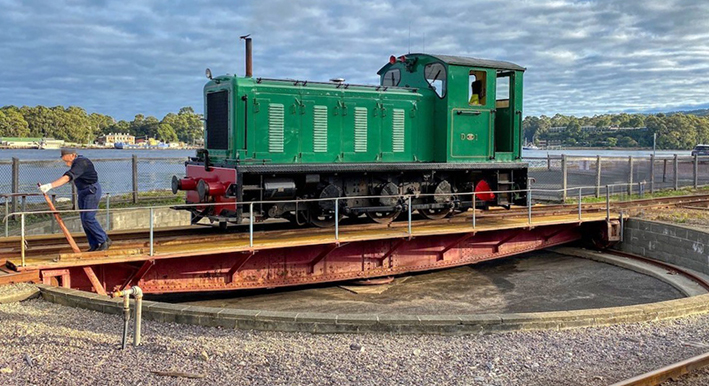
Only a few hundred metres below lies the West Coast Wilderness Railway station at Regatta Point, which takes tourists on fun day trips.

And there one finds the Strahan-Zeehan railway turntable, which was moved from elsewhere and is most likely the device on which 11-year-old  Alice Leatherbarrow lost her life.

“Affectionate remembrance of Alice Leatherbarrow, died illegible 1892, aged 11 years,” reads the proud marker.

News reports of her macabre death didn’t indicate where the turntable originally was, apart from at Strahan. It was part of the rail network which brought rich copper from Queenstown to Strahan.

And the group of children she was playing with could not provide much information, apart from that fact that they were pushing the turntable around and she must have fallen.

The turtable, which was used to change the engine’s direction, rotates, just like a playground roundabout. The playground version has been banned in many parts of the work due to their danger of spinning off, but a playgroud version would have been much safer for Alice.

The Mercury described it thus: “There are several recesses, the sides of which are made of concrete with sharp edges, and it is supposed that the child went against one of these edges and could not get out of the way in time to allow the table to pass.

 “It must have been going at a great speed, to inflict the ghastly wound that appeared on the child, who was partially disembowelled.’’

The mercury

If you stand at her grave and listen, you can imagine the sounds of the children laughing as they play drifting up from the turntable below.

Strahan, Tasmania

SOUrCES: The Mercury (Hobart, Tas. : 1860 – 1954) Thursday 11 February 1892 p 4

Strahan Village Blog, viewed at https://www.strahanvillage.com.au/blog/rail