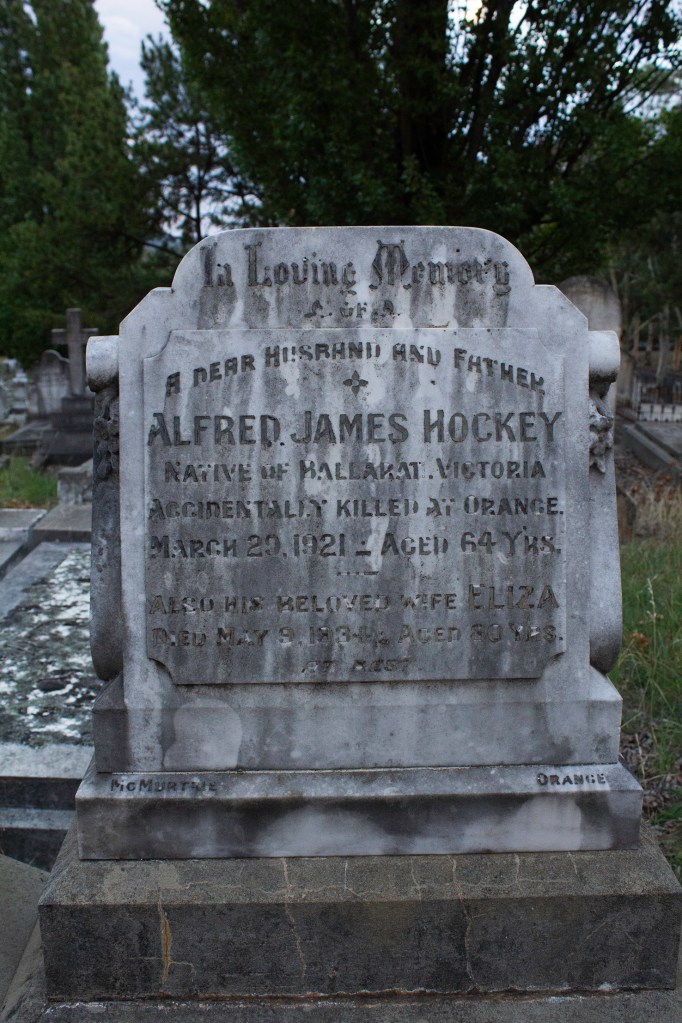
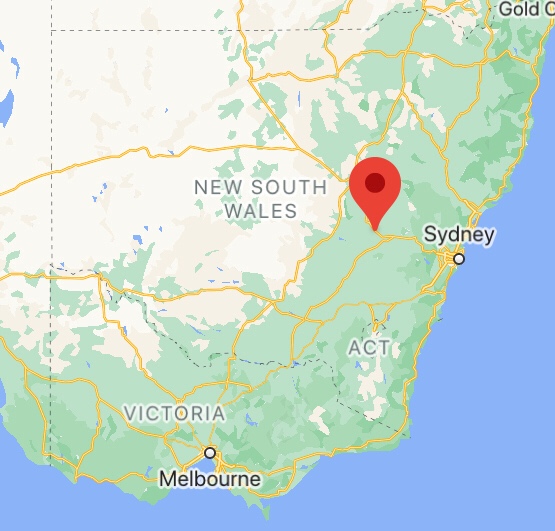
Orange cemetery: Alfred James Hockey, native of Ballarat, Victoria, accidentally killed at Orange, aged 64 yrs. Image: Sharyn Moodie
It was 64-year-old Alfred James Hockey’s habit to meet the Forbes mail train by taking a short cut across the tracks at Orange Railway Station.
He had “rheumatism’’ and so avoided the longer route via an overhead footbridge, half a mile away.
His mangled remains were found near the station by two railway shunters on March 29, 1921.
He had been dragged about 25 metres by the train.
“The back had been broken about the middle, and a mark and bruises traversed it. Some of the organs, particularly the lungs, had been forced out of the thorax.’
reported the local newspaper
His left arm was nearly severed above the wrist. Death had been instantaneous.
It is thought he had verbal permission to take the short cut, although no one at the inquest admitted to that.
There were signs posted at the station declaring the route Hockey took was forbidden.
Sources: Leader (Orange, NSW : 1899 – 1945)Monday 3 April 1922 p 1
The Sydney Morning Herald (NSW : 1842 – 1954)Friday 31 March 1922 p 10
The old number 4 pump station, Merredin, Western Australia, where William Stamp took strychnine in March 1928
William Stamp, 54, was chief engineer at No 4 Pump Station on the outskirts of Merredin.
One day in March, 1928, he walked into the engine room dripping wet and asked a fellow employee “how’s things?’’
When his co-worker asked why he was wet, he said “Things are not too good with me.
“I have just taken a dose of strychnine. I also jumped into the dam, but could not stand it any longer, so got out again.”
He threw his keys on the flue, saying he would not need them any more.
Stamp was taken to Merredin to have his stomach pumped, violently convulsing on the way, but died within a few minutes of receiving treatment.
He told the doctor he did it due to worry.
His wife and family had just left for a visit to Perth, and a friend told the inquiry he had spent an uncomfortable afternoon with Stamp, who was talking about the second coming of Christ and being spied on.
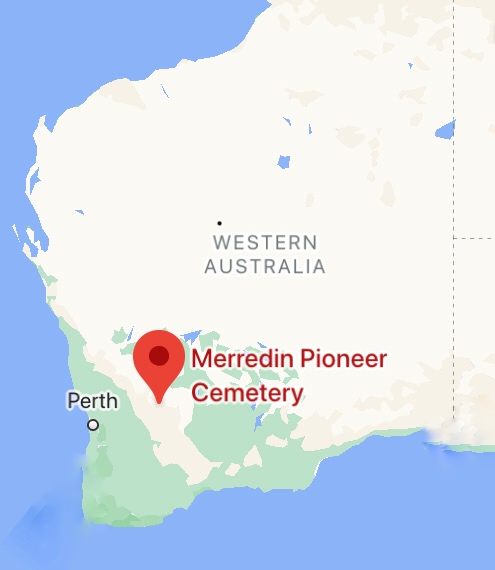
Stamp’s headstone no longer exists, but he is buried in the Merredin Cemetery.
William Stamp’s resting place is near to, and looks similar to, the above piece of dirt in the Merredin Cemetery, WA
The pumping station was part of the Golden Pipeline, which helped open up Western Australia’ goldfields. It was built in 1902 as one of eight pumping stations of the Goldfields Water Supply Scheme.
The Irish engineer who designed the important scheme, Charles Yelverton O’Connor, also committed a determined suicide – by shooting himself as he rode a horse into the ocean at Robb Jetty, south of Fremantle.
Sources: Merredin Mercury and Central Districts Index (WA : 1912 – 1954)Thursday 22 March 1928 p 5, Thursday 15 March 1928 p 5
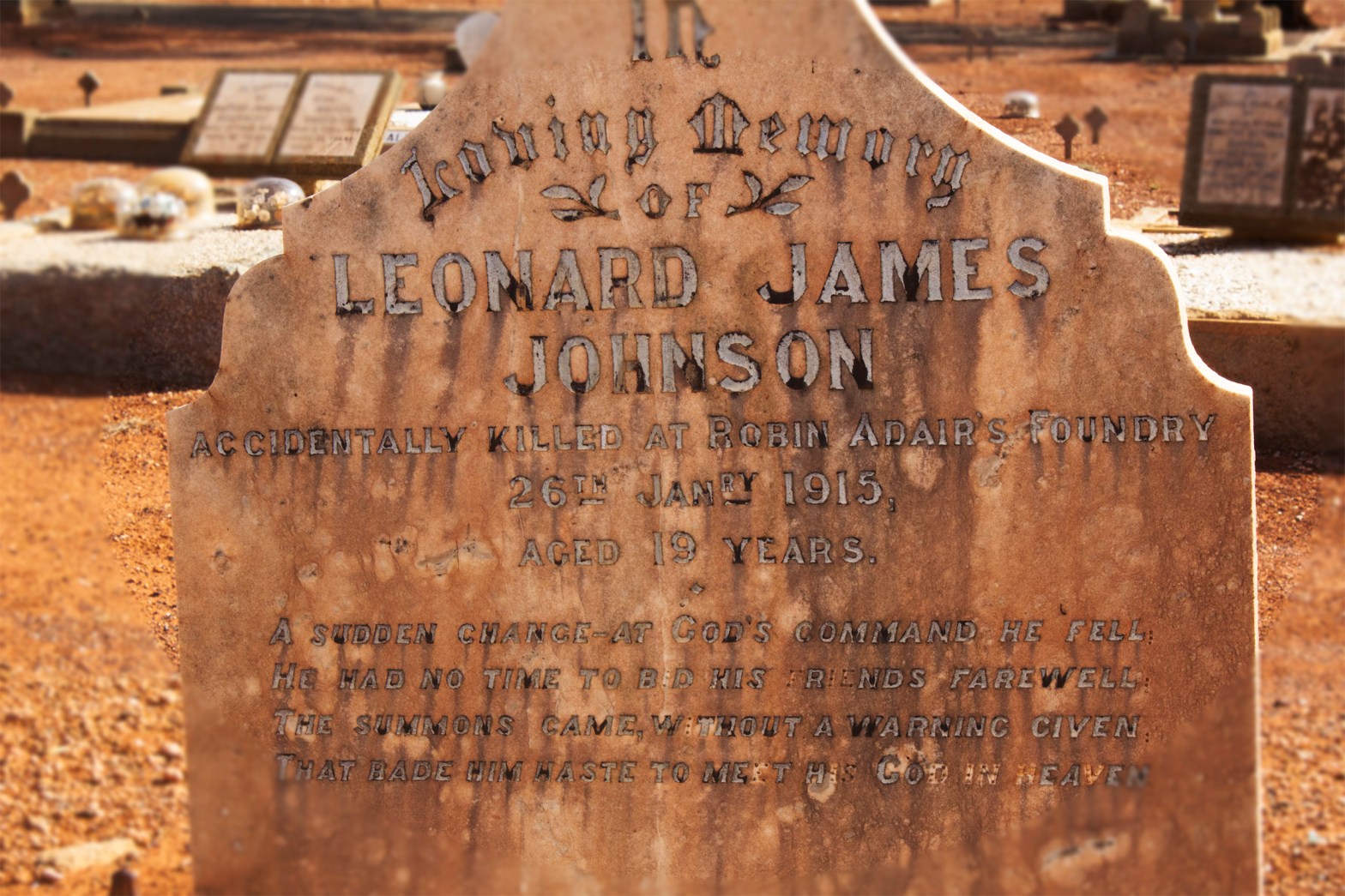
The explosion that killed 19-year-old Leonard Johnson was heard two miles away.
Leonard was at work at the Robin Adair Ironworks in Kalgoorlie, Western Australia, along with another man named named Moiler.
They needed to break apart a brass piston cylinder, and decided to heat the hermetically sealed head in the flames of the blacksmith fire.
Moiler left Johnson holding the piston.
Soon after, an explosion threw Johnson five metres and scattered live coals everywhere.
When the remains of Johnson’s body were picked up, his clothes were still on fire.
“The lower portion of his abdomen had been torn away, his right leg was severely broken and almost taken off, and he sustained many other terrible injuries about the head and body”.
Moisture within the piston expanding in the heat was blamed for the explosion, which also sent debris hurtling into the street. One portion shot through the galvanised iron building, and struck the veranda of a house 80 yards away.
Another just missed hitting the driver of a passing steam roller.
Leonard’s mother lived nearby and rushed to the scene when she heard the explosion and there was a “pathetic scene when she was informed that her son had been killed’’.
Johnson’s grave is in the red dirt of the Kalgoorlie cemetery
Sources: Barrier Miner (Broken Hill, NSW : 1888 – 1954)Thursday 28 January 1915 p 2
Kalgoorlie Miner (WA : 1895 – 1954)Tuesday 2 February 1915 p 3
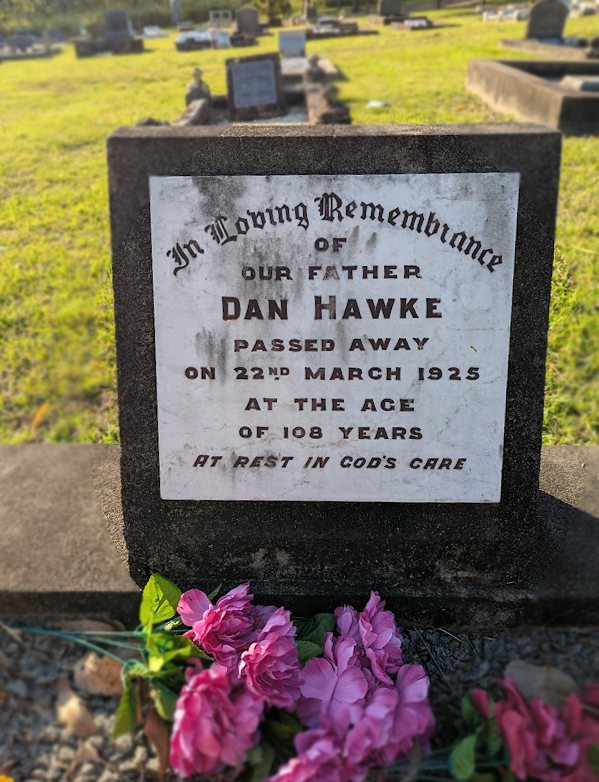
The age of 108 claimed on Daniel Hawke’s headstone in the Emu Park cemetery is impressive. Indeed, newspapers across the country described the man as Queensland’s and possibly Australia’s oldest man when he died in 1925.
Daniel Hawke’s headstone in the Emu Park Cemetery. Image Sharyn Moodie 2025.
But his coffin, buried deep beneath, was inscribed with the number 105. This still may have kept him his title if it was true.
Today, internet searches reveal a more likely birthdate of May 24, 1837, which meant he was 87 when he died on March 22, 1925.
It is possible Hawke, who was Mongolian, did not know his age himself . He claimed to have been born a year before Queen Victoria (also born May 24, but in 1819).
At the time, Rockhampton’s Evening News newspaper wanted to verify the figure with his sons and daughters at his funeral at Emu Park, Central Queensland, but claimed to be unable to do so as “none of them turned up”.
However, three of his six immediate descendants did turn up at the Supreme Court where they contested his will, which had left his estate to the widow who nursed him in his final year.
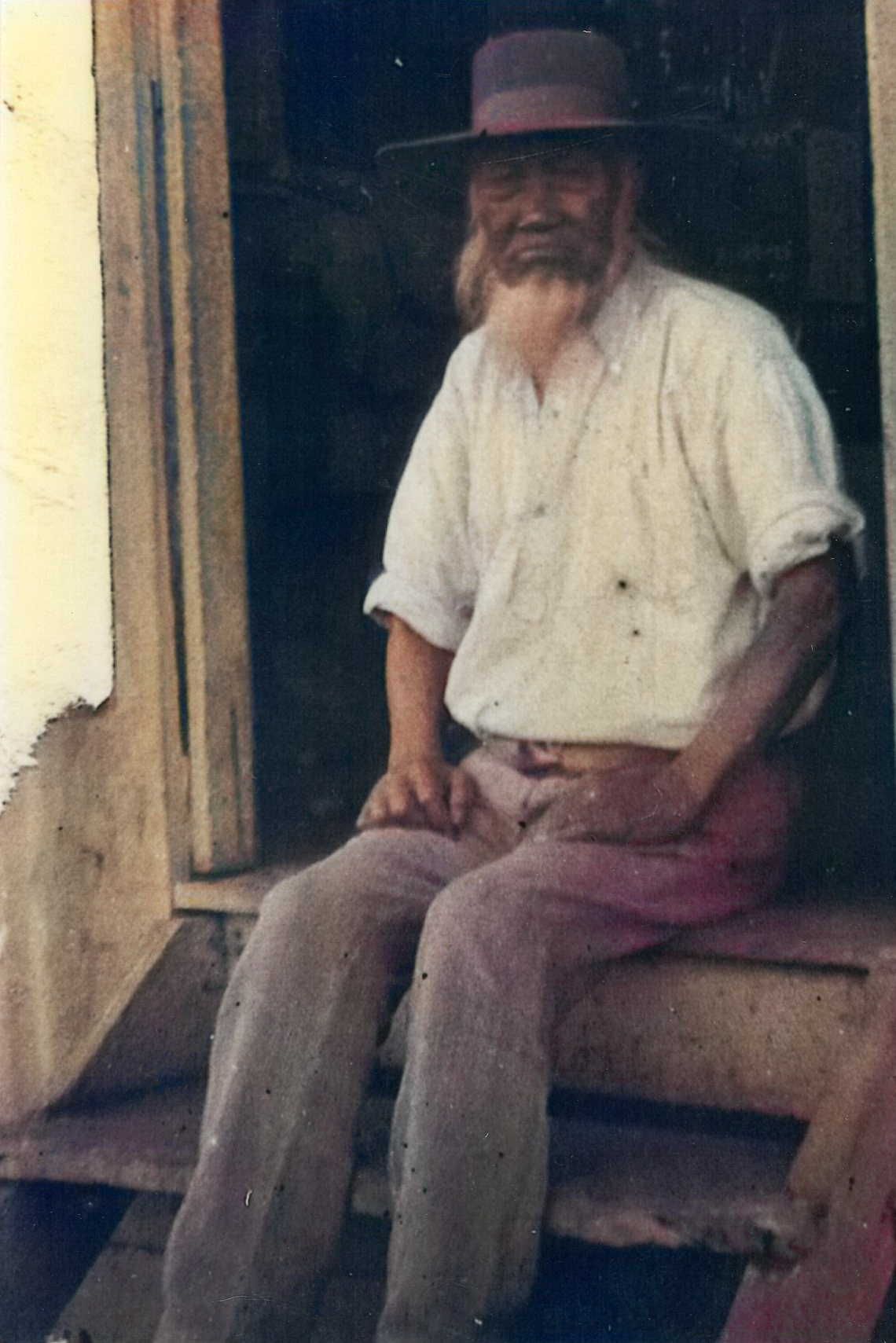
Daniel Hawke (also Hawk) was said by at least one newspaper to have been born in Hong Kong, but most simply described him as being of “celestial origin”. However, his obituaries preferred to point out his staunch patriotism, which is interesting in an era where the “yellow peril’’ was strongly feared.
Dan Hawke, taken in the 1920s. Image State Library of Queensland.
The articles go to great lengths to labour the fact that Hawke always proudly asserted that he “was a British subject, and what he treasured above everything was a Union Jack flag, in which his remains were laid to rest”.
“The late Mr Hawke was a staunch patriot and had no time for anyone who was disloyal and unpatriotic. He showed his patriotism in the war period.’’
Morning Bulletin
By the time he died, no-one alive remembered when he first came to Central Queensland, but it appears to have been in his 30s. That would correlate with the 1840s, too early for Australia’s first gold rushes when many Asians came to Australia.
Hawke was married and survived by four sons and two daughters – all well into a mature age at his passing. A wife is mentioned in one of the court stories, saying that she was a shopkeeper in Rockhampton, who had left him after having their sixth child. She had died about four years earlier.
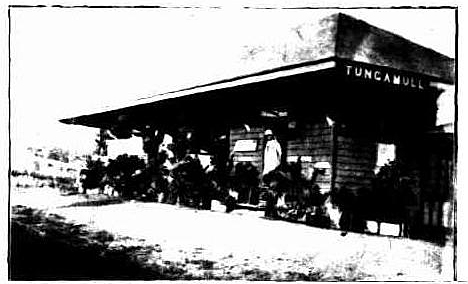
Hawke also was a businessman. In the early 1880s, when he would have been in his early 60s, his Morning Bulletin obituary says he was a store keeper and hotelkeeper at Tungamull, on the coach line between Rockhampton (population 15,000) and the coastal settlement variously known as Sandhills or Emu Park. The hotel was known as the Halfway Hotel, due to its location between the two centres.
His business prospered when a railway line was built between the two centres. The 47 kilometre-long line, which opened on December 22, 1888, served to bring thousands of hot Rockhampton residents for a day’s jaunt at the ocean.
Hawke’s businesses adjoined the railway station, and were often mentioned in newspaper articles as a community meeting place. He also got mentions when he was charged with supplying alcohol to an Aboriginal woman (the case did not proceed) and once when he refused hospitality to the hotel licencing inspector (but his licence was still renewed). He appears to have remained working at his hotel until about two years before he retired.
His obituaries, as they tend to do, lauded his character.
“During the big drought in the eighties he displayed a signboard outside his shop stating that rations could be obtained free by any man who was out of work. It is known that he has had a doctor sent to poor families and paid the expenses out of his own pocket…
“In the old coaching days it was a great treat for the travellers to sit round his fire and listen to yarns told by him…
“He is said to have put £500 in notes away in a box for 30 years, and on going to get them found they had decayed and were so much dust…
…they read.
Newpaper articles about Hawke’s long and generous life soon turned to tales of family fracture when it became known that he had left his remaining estate/cash to the middle-aged widow who had nursed him for the final year or so of his life.
One newspaper article claimed Grace Luine had become his mistress as he neared 100 years of age, but the court case stories mostly described her as simply a friend. He had moved to her home 18 months before he died, having sold his business and apparently not wanting to live with any of his children. His relationship with them was described as “contentious”.
He had some kind of “accident” about a year before he died, and required nursing for the rest of his life.
Three of his six offspring, William Hawke, 77, Sophia Splayford, 72 and Ada Rebecca Kennedy, 69, brought the case, which was heard over three days in the Supreme Court. The children believed Mrs Luine had an undue influence over their father, and that he did not know or approve of the contents of the will.
There were claims of Hawke having dementia, of Mrs Luine having saved Hawke from being strangled and thrown into a creek by his son Alex 25 years earlier and thus earning his ever-lasting gratitude, of the estate being dwindled by money paid to Mrs Luine for his care.
It was also revealed that another son, Henry, had tried to gain his father’s riches by inducing an insurance agent to convince his father to make a will in his favour.
The court found in favour of the Hawke descendents making the claim, saying they only sought to be recognised in the dying wishes of their father, as the estate had dwindled considerably by then, partly thanks to court fees, partly due to loans or money Hawke had paid to Mrs Luine.
The jury found that Mrs Luine appeared to have looked after the old man well, but that Dan Hawke was not of sound mind when he made the will leaving money to her, and that he had been unduly influenced.
Ekeing out the character of a man through newspaper reports of a court case so many years later is difficult, and it is impossible to know what kind of a man Dan Hawke really was. He may not have been 108, but that big number reflects the possibly larger-than-life impact his life had on the community.
The Tungamull Railway Station the year Hawke died. No evidence remains of the station or Hawke’s Hotel and store, although a railway bridge can still be seen over a picturesque waterhole by the Emu Park road at Tungamull. Image: The Capricorn newspaper, Saturday 12 June 1925, p8
Emu Park, Queensland, Australia
Sources: Daily Examiner, Saturday 28 March 1925, p4
Evening News, Tuesday 24 March 1925, p4, Friday 10 July 1925, p4, Friday 18 September 1925, p5
Morning Bulletin, Wednesday 25 March 1925, p12, Tuesday 22 September 1925, p8, Friday 18 September 1925, p5, Tuesday 22 September 1925, p8
The Richmond River Express and Casino Kyogle Advertiser, Friday 25 September 1925 , p3
Gulgong 1928 – The man who triggered “the last of the poor man’s gold rushes’’ in New South Wales, died an invalid pensioner at the ripe old age of 80.
John Thomas Saunders Junior passed away in 1928 after a short stay in the hospital of the town which sprang up overnight around his famous find.
Those who visit the town now cannot ignore its golden history – it is reflected in its very streets, with gold-rush era style buildings and tourist experiences abounding.
And Saunders, dubbed the ‘grand old man of Gulgong’, is also written into this history. One of the town’s tourist attraction, the Gulgong Gold Experience, is on his own street – Tom Saunders Avenue.
Thomas Saunders’ gravestone in the Gulgong Cemetery. Image Sharyn Moodie, 2019.
But Saunder’s headstone, in the sprawling Gulgong cemetry, however, does little to portray the importance of the man to the town, which surged from an “uninteresting little hamlet” to a bustling region overrun by gold-hungry men and hotels to quench their thirsts.
Tom, as he was known, was the youngest of a tribe of at least 10 Saunders children. He was born by the Hawkesbury River in 1848, and grew up breathing gold dust – by the age of six, his family was living on the famous Ophir gold diggings, where Australia’s first payable gold was found in 1851.
A Mudgee newspaper article published on his death described his early prospecting as he played in the dirt of the goldfield.
“There the youngster, a baby-gold-getter, washed his first prospect in his mother’s baking dish and won for himself the values that incited him to pursue the elusive profit.
“The spirit of the chase was bred in him.
MUDGEE GUARDIAN
The same article describes Tom as becoming a prospector at the age of 12.
He was among the first rushers at Biragambul, less than 10 kilometres from the scene of his later fame. The next ten years were spent following that golden lure. But when he was about 22, he hit major paydirt.
As so often happens with history, the truth is quite slippery.
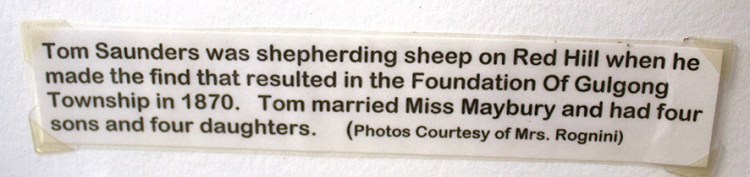
Multiple internet searches refer to Tom as a shepherd. Whether he was or not is difficult to ascertain. Some newspaper articles mention that he was working for a station owner, but that does not mean he spent his days herding sheep.
This caption at the Gulgong Gold Experience states that Tom was shepherding when he hit gold, although there are many more online references to his persistent and prolonged prospecting on official claims.
Also, in goldfields parlance of the time the term referred to the class of bush workers who ignited the gold rush – ordinary people, not trained geologists. The term was also used in a derogatory fashion to denote someone who followed or watched other miners, trying to round up some of their success.
Furthermore, one common story about Saunder’s discovery is that an elderly shepherd did indeed find some promising quartz samples 11 years beforehand, and they were kept by the Saunders family until Tom Jr decided to investigate further.
A letter to the editor in the Gulgong Guardian by someone calling themselves “Jumbuck” names that shepherd as Irvine, and claims Irvine showed Tom the region one wet day when there were “no sheep fit to shear’’.
Another story says that Saunders was using a plan “in the possession of his father’’, on which he based his prospecting. The truth may be a combination of the two.
Either way, Gulgong was known to be auriferous (what a wonderful word), with solid specimens known many years before the rush occurred. It was referred to as a poor man’s rush because the gold was close to the surface, with steady returns for a man working without expensive machinery.
One story claims Tom “struck his patch’’ in January 1970, when he supposedly washed 1lb of gold in a fortnight.
“This was good enough and he reported the find to the warden at Mudgee.”
A little rush followed but the lack of water meant diggers abandoned their efforts. Tom is said to have persisted, and in April made the find that, along with a couple of handy thunderstorms filling the creeks, started the rush that put Gulgong on the map.
At the time there was talk of a reward for the find, and conjecture about whether it should go to Saunders, his prospecting friend Joseph Dietz or even the shepherd Irvine.
Mr Jumbuck, in the Gulgong Guardian, claimed that the
shepherd Irvine is entitled to at least an equal share of the honour and profit of the discovery of Gulgong with Mr Saunders…more so than Saunder’s mate Mr Deitz who was not with Mr. Saunders when he found the gold.
mudgee guardian
There is no proof a reward was ever given. A cairn was erected at Red Hill Reserve in 1970, on the centenary of the find. It partially reads “As An Acknowledgement Of The Worth Of Thomas Saunders Discovery And A Tribute To The Pioneering Spirit Of The Goldminers Whose Work And Initiative Established This Town Of Gulgong.”
Tom spent much of the rest of his life centred around Gulgong, marrying in 1872 and fathering eight children.
Tom was a contemporary of Australian author Henry Lawson – there is a photograph on the Online History of Gulgung and surrounding areas website featuring the two side-by-side.
Gulgong, NSW
Sources: Australian Town and Country Journal, Saturday 11 June 1898, p24
Empire, Saturday 25 November 1871, page 4A
Mudgee Guardian and North-Western Representative, Monday, September 21, 1953 , p3Thursday 5 March 1953 – p 10
1919 – Unaccompanied schoolboy Howard Tidbury was taking the overnight train home to Blackall for Christmas in mid-December. He was 11 or 12 years of age.
He was boarding at Rockhampton’s Sisters of Mercy Convent’s school for boys.
The school’s sister-in-charge had asked Mary Hole, the mother of four other students, who was also travelling on the train with her sons, to “keep an eye to him’.
This she did, keeping him with her in a “short’’ sleeping carriage when they boarded the mail train on Monday, December 16. It left the station at a quarter-to-seven that evening.
The carriage contained six bunks, and as there was another passenger in the carriage, Tidbury shared a bunk with one the Hole boys, George.
Early on the morning of December 17, Tidbury asked Mrs Hole where he could go to the toilet. She got up and showed him, he went and returned.
A little later she saw him get up and leave again, in the direction of the lavatory.
When, after ten to 15 minutes he had not returned, the concerned woman went looking and then raised the alarm with travellers in the adjacent carriage.
Still, no-one could find the boy. It wasn’t until much later that afternoon the someone on the goods train coming from Rockhampton spotted his unconscious body about five foot from the rail line near a siding at Yamala, 17 miles out of Emerald.
There was blood coming out of Howard’s ears, nose and mouth. He did not regain consciousness and later died at the Emerald Hospital.
An inquiry found that the train would have been travelling about 25 miles per hour at the time he somehow left it.
“A fall from a train travelling at that speed was sufficient to cause death.”
Magistrate’s inquiry
No-one could discover why Howard ventured out of the carriage in the dark of night.
No-one was blamed for the sad death, but imagine the guilt which Mrs Hole must have felt, returning home with her four healthy sons.
Tidbury is buried in the Emerald cemetery.
Sources: Morning Bulletin, Thursday 18 December 1919, p8, Saturday 20 December 1919, p8 and Tuesday 10 February 1920, p5
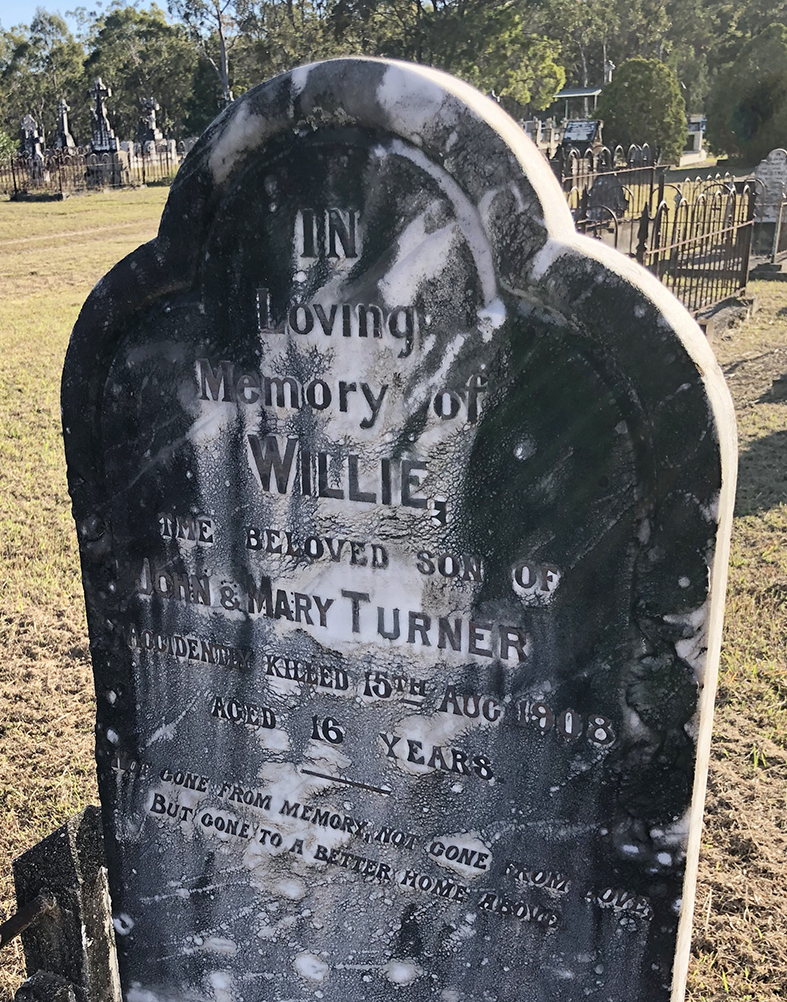
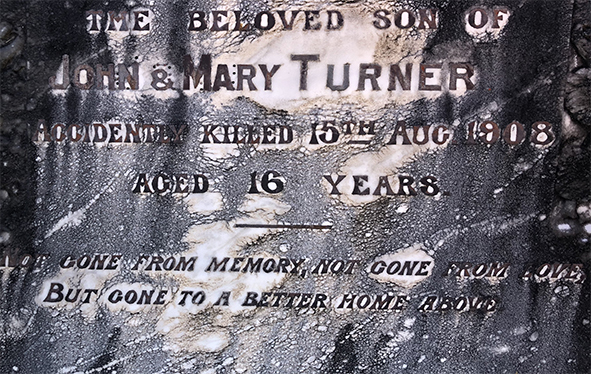
Turner’s gravestone in the Herberton Cemetery. Image: Sharyn Moodie 2023
1908 – William Turner, 16, accidentally shot himself through the brain with an “ever-dreaded’’ pea-rifle while hunting ducks.
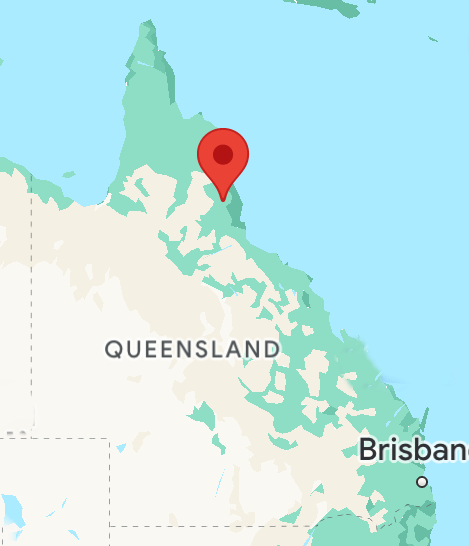
The incident took place west of Cairns at Evelyn Station, where Turner had been working for the past eight months. Evelyn Station was an important part of the Herberton region’s early history, with grazing land on one side of the Wild River, and cedar along its banks.
The local publication, the Wild River Times, quite eloquently described the event in a submission to the Charters Towers’ Evening Telegraph in the overstated vernacular of the era.
“The bright young life was suddenly brought to an untimely end on Saturday morning last per medium of the ever-dreaded pea-rifle.”
WILd river times
“On Saturday morning in company with another lad, Jack Miller, young Willie Turner (who was a fine, healthy lad, and just turned sixteen) set out duck-shooting on the Station, carrying a rifle. Miller had shot a bird, and left Turner to retrieve it. He was about 20 yards away when he heard a shot and turned around to see Turner fall to the ground.”
The projectile had entered just beneath Turner’s right eye. An Aboriginal stockman, Mr Perrott, rode in advance and told the station’s owner William Mazlin what had happened, and Mr Mazlin “broke the sad news to the lad’s parents at their home.’’
“The news spread like wildfire. And the whole of Herberton felt shocked at the terrible calamity.” A portion of the bullet was extracted at the post mortem held at the parents’ home.
At the Requiem service held at Herberton’s Grace Street Methodist church, Reverend Webster, spoke of the many accidents from pea-rifles and warned parents against them.
But only a week later and about 26 kilometres away, an 18-year old, John Cotter, died when a 13-year-old’s finger slipped on the trigger of a pea-rifle as he rose to take a shot at a tree.
From the Herberton Church “a large concourse of women and children joined the cortege which wended its way to the cemetery, where the burial service was read, and the grief-strlcken parent, sisters, and brothers bade farewell to one they held dear in life, yet hope to meet in Heaven above”.
William was the third eldest son of his parents John and Mary, and was one of nine children. His parents, who lived into old age, are buried in the adjacent plot at the Herberton Cemetery.
Pea-rifle deaths occured regularly all over Australia. The State of Victoria banned anyone under the age of 18 from using guns such as pea rifles, which shot a small ball cartridge, in 1912. New South Wales introduced similar legislation in 1936.
Herberton. Queensland.
Sources: Cairns Morning Post, Saturday 22 August 1908, p3
Daily Mercury, Monday 31 August 1908 , p3
The Evening Telegraph, Monday 17 August 1908, p3 Queensland Times, Ipswich Herald
Victorian Historic Acts: Pea rifles and Saloon Guns Act 1912 viewed at
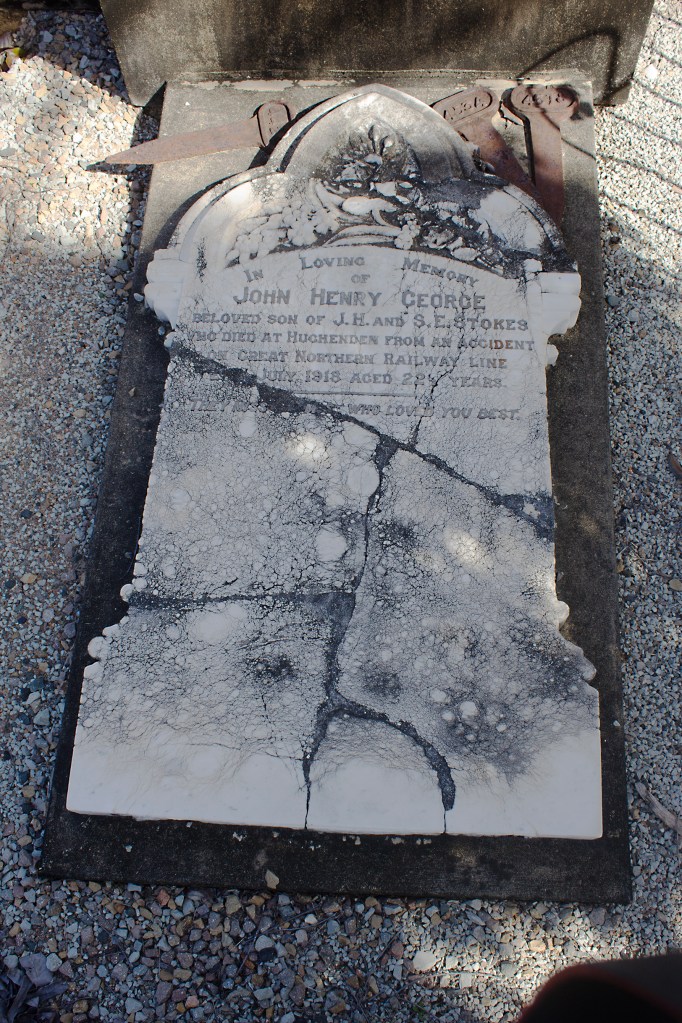
TOWNSVILLE – The Town Band, which usually played in the street every Monday night, took a break the week John Henry George Stokes died in 1918.
He was one of the band’s leading cornet players, the Townsville Daily Bulletin reported.
Image: Sharyn Moodie 2023
Known as Jack, the 22-year old, was a train conductor, and had left Charters Towers on the passenger train on Friday night for Hughenden. There he was discovered missing, and by backtracking from where he had last been seen, a lengthsman was sent from Prairie to start a search.
He found Stokes unconscious besides the line about eight miles from Prairie. He was taken to Hughenden Hospital, where he died without regaining consciousness. An inquiry determined no-one saw Stokes fall.
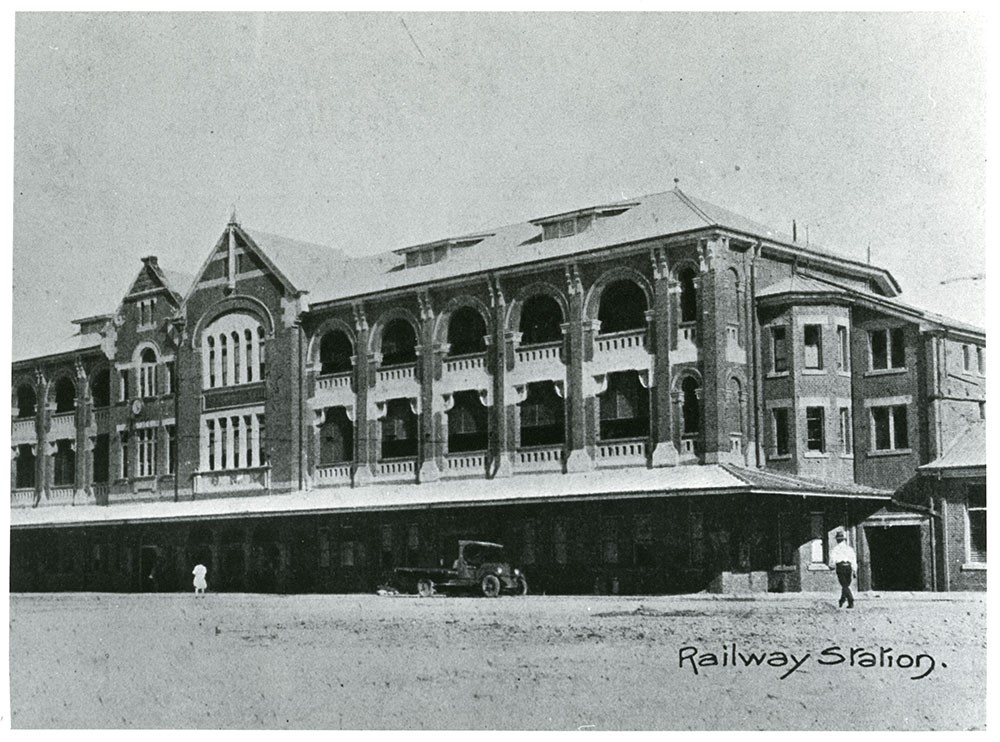
A special train conveyed his body home to Townsville, his home town, the next day.
Six months later his band would be part of a huge procession celebrating Armistice Day.
Stoke’s supine headstone lies cracked but pieced together in Townsville’s West End cemetery. Image Sharyn Moodie 2023
Townsville Railway Station, where Stoke’s body arrived on a special train the day after his mysterious death. Image Townsville City Council.
Townsville, Queensland
Source: Cairns Post, Tuesday 30 July 1918 – p5
Morning Bulletin, Wednesday 31 July 1918 – p10
Townsville Daily Bulletin, Saturday 10 August 1918 – p4
Townsville Daily Bulletin, Tuesday 6 August 1918 – p 6
…whose big heart throbbed for his friends, died suddenly of a broken one, alone
nichola andrew tadich’s headstone
1932: It is a heart-rending headstone for a man who most likely died of heart failure.
Nlchola’s headstone in the Ingham Cemetery, North Queendland. Image: Sharyn Moodie 2023
Forty-five-year-old Nichola Andrew Tadish was a salesman who was travelling for Wizard lighting plants in 1932.
He had been conducting his business in the Ingham region in Far North Queensland for about three months. It was a time when electric lighting was not far around the corner, and demand for gas and kerosene lighting systems was still high.
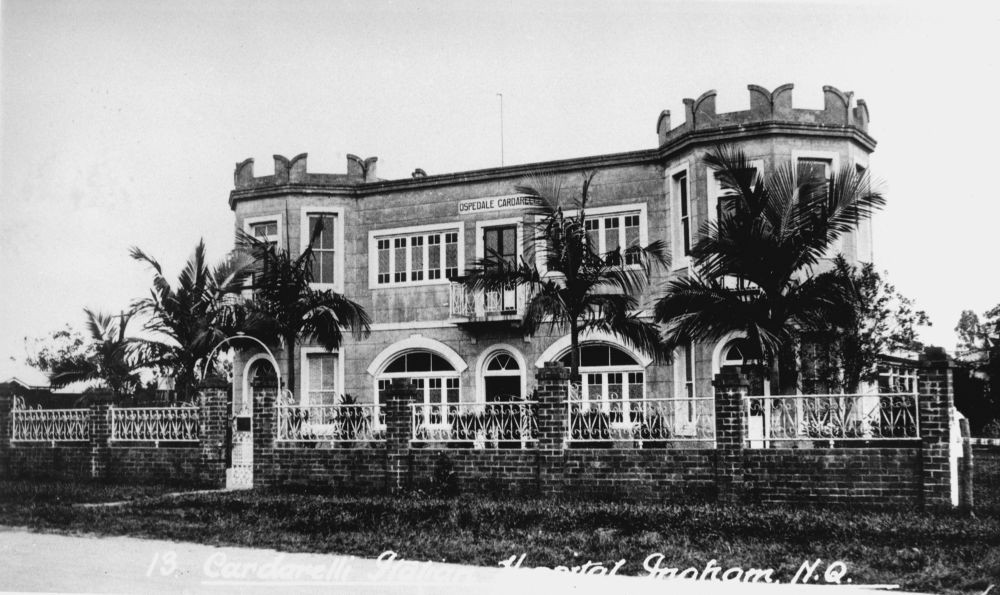
Nichola had complained of feeling unwell during the previous few days and on the morning in question went to the Cardarelli Italian Private Hospital, where he was admitted, but was found dead in bed shortly after 9am, said one newspaper report.
But another said he received medicine for his ailment but collapsed and died before leaving the hospital.
Ingham’s Italian Hospital in 1936. Photo John Oxley library collection
A post-mortem diagnosed heart failure.
While Nichola was reported as having been married, his tombstone would indicate perhaps he wasn’t.
He was Australian-born of Austrian heritage, possibly did not have any children, and was thought to have been from Petersham, Sydney.
His name was variously reported as Nichola/Nicholas Standish/Tadish in some papers.
Ingham, Queensland.
Sources: Northern Herald, Saturday 26 November 1932, p20
The Telegraph, Monday 21 November 1932, p4
The Northern Miner, Saturday 26 November 1932, p 3
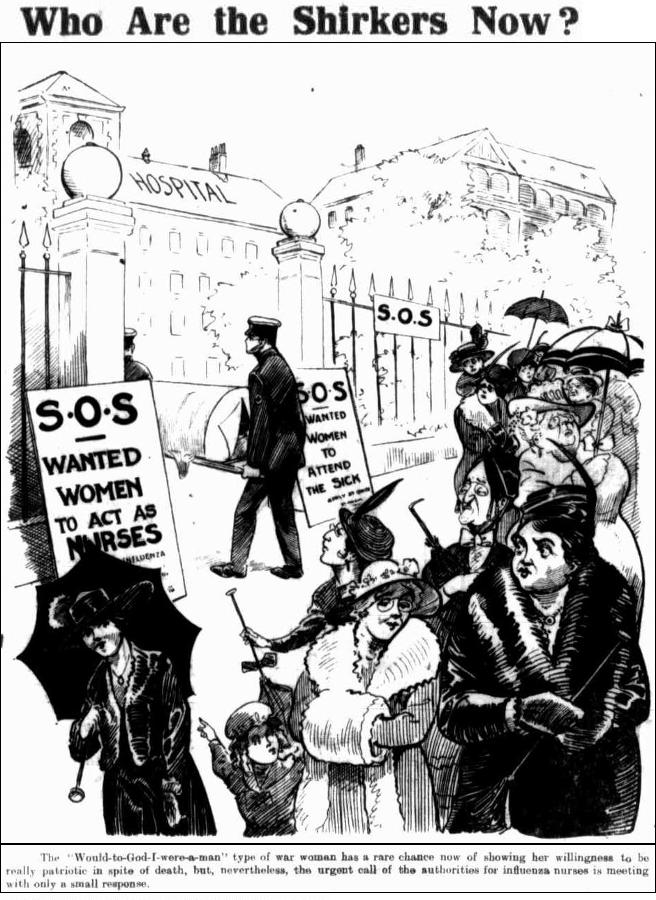
In Australia, the 1919 Spanish flu pandemic had many similarities to the COVID-19 outbreak, including closed state borders quarantines, and restrictive public health measures.
And just as in COVID times, health care workers took the brunt of the risk. But what was different was the depletion of male workers due to the recently finished Great War, and pressure on women to step in.
Image: Worker newspaper.
The NSW-Queensland border was closed in early 1919, but by May cases were so high in Queensland that it was reopened again.
It didn’t take the disease long to reach the north of the state, including the western goldfields.
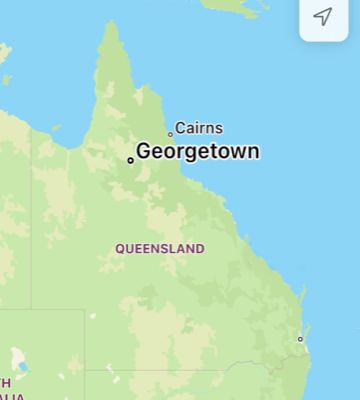
At the Etheridge Hospital in Georgetown, 500 kilometres inland from Townsville, the situation was as dire as elsewhere.
In July it was reported the town had mild cases only, but by mid-August, a more severe form of disease had hit and the hospital was full. It was said half of the town’s population was infected. There were no doctors and drugs were limited.
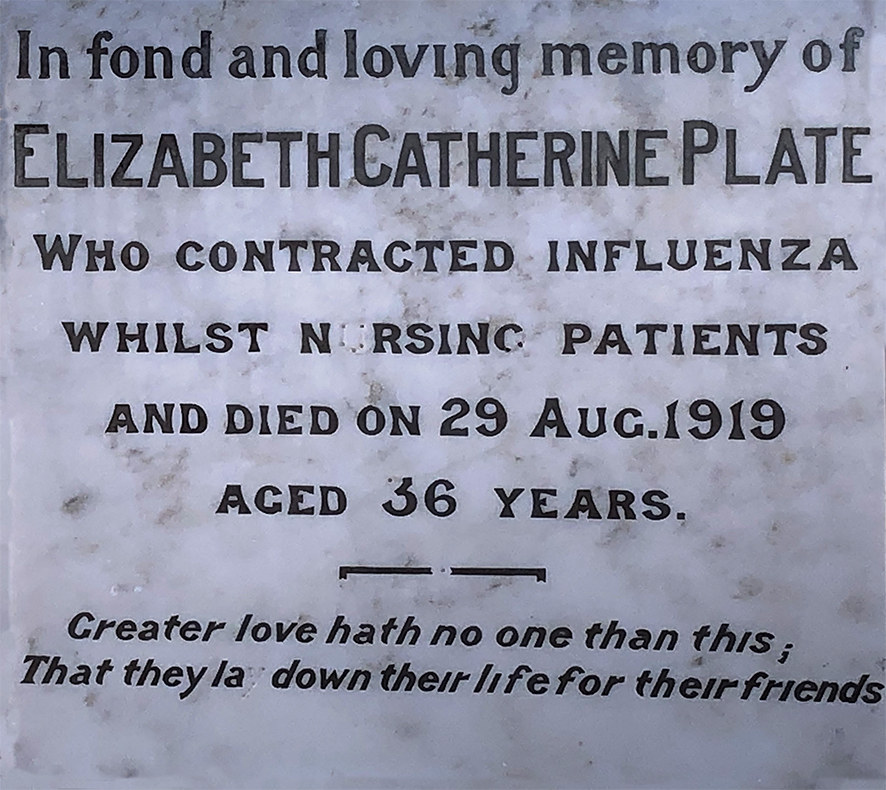
Public pleas were being made for nurses. It is not known whether Elizabeth Plate, or Lizzie as the newspapers reporting her death called her, was a nurse or just someone who stepped up to help.
Either way, she was dead of the disease by late August. By October the Etheridge shire reported no cases.
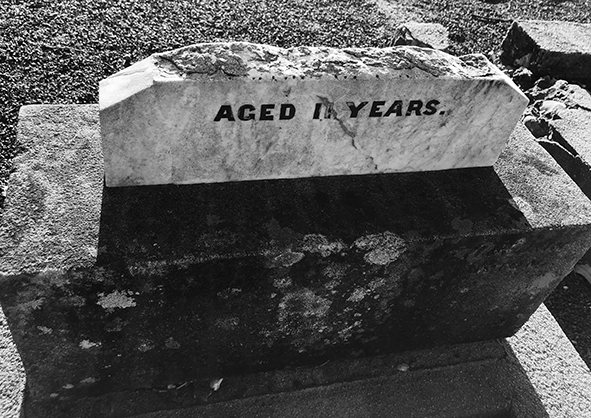
1916 – Mamie (Mary) Hallinan wanted her pocket money, her toys and her clothes, to be sent to an orphanage on her death.
She had been an invalid since “almost from infancy”, and must have known she would not make old bones. Her affliction has been lost to time.
She died peacefully at the age of 11 at the family residence, the Emerald Post office in Central Queensland.
The Emerald Post Office and residence, where Mamie died.
This is how she was remembered.
“Mamie…had a remark ably intelligent mind, almost marvellous in one so young.
“She had a lovely disposition, and always delighted in doing little works of charity for those in need.
“She was a universal favourite with all the little folk, in whatever town she happened to live in and indeed grown-up people delighted to converse with her; she was quite a little apostle in her own way, and did much good.
The catholic advocate
Her family had strong Catholic links, her uncle was Townsville’s Monsignor Bourke. She was the only daughter of W and K Hallinan. It is unknown if she had any brothers.
Mamie’s body was taken to the Emerald Catholic church, which was decorated by the Presentation Nuns with white silk and white flowers.
“All the Convent school children formed a procession and marched to the church, where six of the bigger girls carried the coffin from the car to the High Altar.”
The church was crowded, and the Reverend gave a touching account of the dear little child’s patience, piety, and charity.
He said Emerald parishioners were blessed in having a little saint buried in their midst.
The little saint’s headstone now lies broken in the Emerald Cemetery.
Source: The Catholic Advocate, Thursday 24 February 1916, p23
1891 – Railway worker Thomas Hanna was asleep on a railway tricycle when an engine and trucks came around the corner.
The railway was under construction, and was part of a short strip of line between Bowen and the wonderfully named Bobawabba (south of Home Hill).
Hanna was killed about 46 miles from Bowen at Wilson’s Creek. The tricycles were designed to run along the lines doing track inspection.
There is little information available about the incident, except that Hanna was “going round a sharp curve” when he was run into by the contractor’s train.
Given that the magistrate’s enquiry found he was asleep at the time, and that motorized tricycles were not yet in use, it is more likely that the train was going around the bend and Hanna wasn’t going anywhere.
Hanna’s headstone lies on the ground in the Bowen cemetery.
Bowen, Queensland, Australia
Source: The Queenslander, Saturday 20 June 1891, p 158
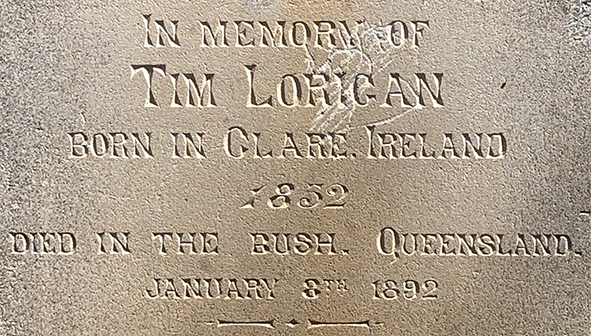
These simple words carved into an old headstone do little to reflect the weeks of desperate searching for missing Durham hotel-keeper Tim Lorigan.
The man’s horse was found, still with its harness on, by the Cobb and Co mailman, John Swan, six miles east of the Herberton-Georgetown crossing of the Einasleigh River.
Lorigan’s gravestone in the harsh dryness of the Georgeotwn cemetery. Image Sharyn Moodie.
Police were sent in search of Lorigan, for “whose safety fears are entertained, as he suffers from fits and bad health”.
Finally found, Lorigan’s body was “in an advanced state of decomposition”.
Lorigan’s wife continued with running the hotel and the mine the couple owned after his death, but her woes were not over.
Only four months later, the hotel was robbed.
“ A widow’s life is not a happy one’’, the newspaper report proclaimed, “ at Durham at any rate’’.
“The silver in the bar till was taken by the burglars, who then entered the bedroom of the proprietress, opened the safe, presumably with a duplicate key, and took all the cash amounting to about £140.
“The robbery took place on the evening of the monthly (mining) pay day. There is no clue to the perpetrators of the robbery, and great sympathy is felt for the widow.
Soon after Mrs Lorigin had to face court to fight an action when a mining engineer made a claim for a half share in the Hawkins Hill Extended No 1 West mine now owned by herself and her orphaned children.
The Mining Warden refused the application for forfeiture and Mrs Lorigan was cheered and the applicant “ warmly hooted’’ on leaving court, presumably because he had tried to take advantage of a grieving widow.
The Durham/Etheridge minefields closest point of reference today is Georgetown, and it was for a short time the richest goldfield in Queensland.
Sources: The Queenslander, Saturday 16 January 1892 – p 144



















 Way to go Australia