DEAD!
First word in a story by the gundagai times announcing that Ada fields had been found
1895 – There was no beating about the bush for the Gundagai Times when it reported that seven-year-old Ada Fields’ body had been found after a four-day search.
The harsh announcement that she was “DEAD!” could only have traumatised her family more.
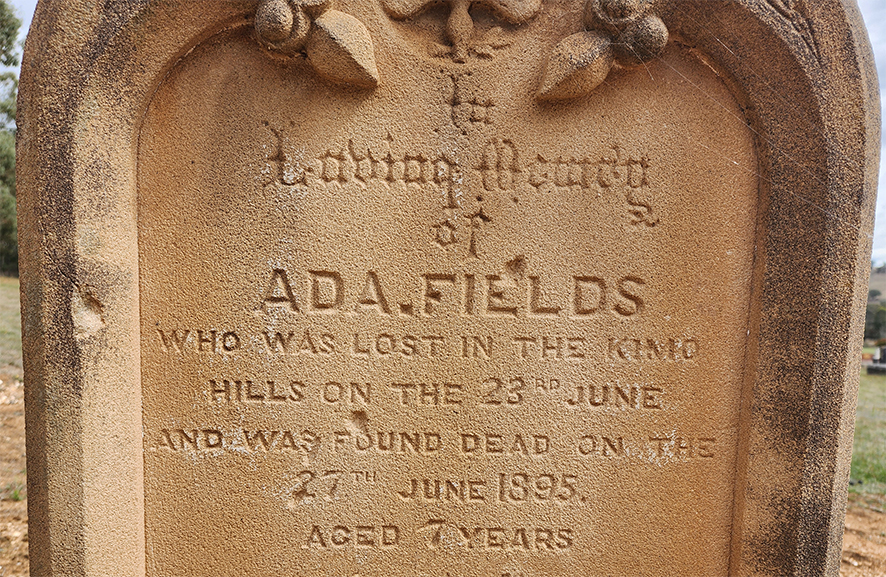
Ada had been lost in the snowy Kimo ranges for four days, after disappearing while looking for goats with her brother one Tuesday afternoon. The brother had returned home to fetch something, and when he went back, she was gone.
The next morning the police were informed and a party of 40 or 50 horsemen started a search.
When she went missing she had been wearing only a calico chemise and a “turkey red” pinafore. She had been barefooted and bareheaded, the newspaper reported.
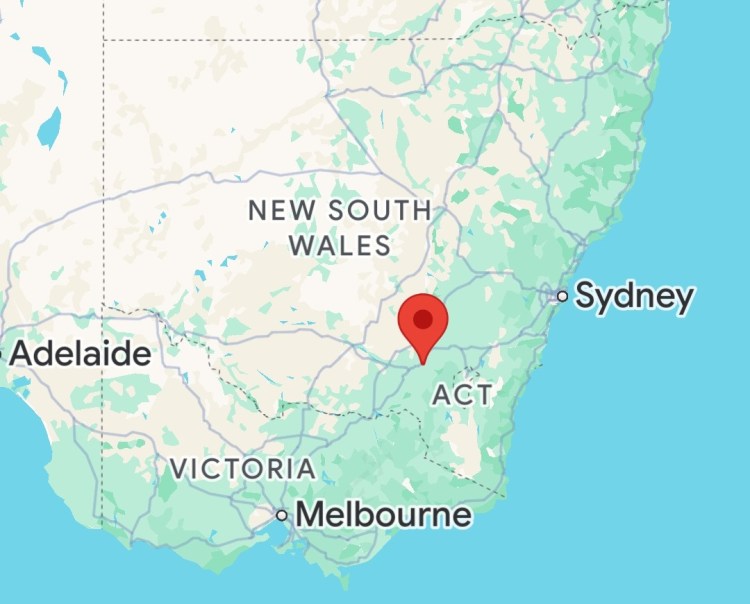
Ada’s mother had passed away a few years earlier. The girl lived with eight siblings with her father, gold prospector Charles Fields, on a goldfield about 11km from Gundagai.
“There are eight other children in the same family all living in extreme poverty, in a small badly furnished house on the Kimo Reef…’’
“It is a mountainous country, full of gorges and scrub, and some of it is as tough as you could find in any part of Australia.
“The search party had been told that the child was as hardy and wild as a deer, and that if she saw a horseman or heard a coo-ee she would be sure to hide.’’ It appears that did indeed happen.
The rough country, split by gorges, was difficult to search systematically. When Ada had not been found that day, “black trackers” were employed. They were not named in newspaper stories, unlike the police and others having vital roles in the search.
There was no further sign of Ada on Thursday, until that evening when a gold miner discovered the bare footprints of a child near a hollow log, about three miles from the Fields’ home.
“She had evidently been sleeping there.”
“On Friday morning the two blackfellows (sic) and about 90 men started from this point, and traced the child to the Yammatree Road.
“There amidst the rocks the tracks were lost’’. Again, just before dark, new clues were found when her tracks were found at a dam.
“The child had evidently been walking round the dam, but she did not go near the water.” Where she went after leaving the dam they could not discover.
Saturday morning began with a renewed determination and at 10.30am, her body was found lying face downwards about 300 yards from where her tracks had been lost at the dam.
“It had been snowing there that morning and the little corpse was as cold as a block of ice.
“But she had only died that morning. The jaw had not set, and the body was quite limp,” said the Gundagai Times report.
There were hopes that she still lived, and resuscitation was attempted.
“Her feet were swollen but not cut, and there were traces of tears upon her face.’’
The area in which was found had been searched the day before, and police were certain she would have seen some of her would-be rescuers.
“What she suffered through the cold, hunger, thirst and fear of three days and three nights, it is impossible to imagine. The experience would have killed a strong man.’’
gundagai times
“When the body was carried to Fields’ house there was a pathetic scene. The brothers and sisters cried bitterly, and could not be consoled. The father too was overcome with grief.”
It is interesting how newspapers of the day were keen to report on the extent of the family’s grief, but had no interest in minimising that grief by reporting the story with sensitivity.
I could not find any evidence of community support to cover funeral costs or her headstone, but it must have been provided, given that her family was too poor to afford the headstone that still stands strong today.
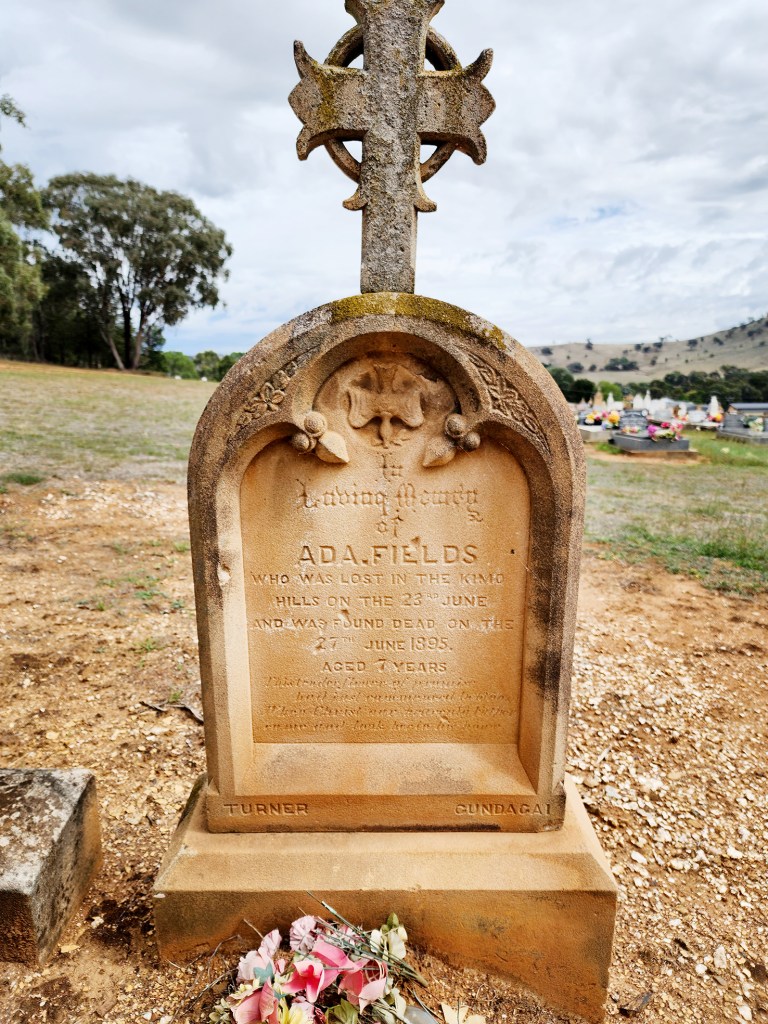
I could also not find any reportage of the funeral, although one would assume it was well-attended given the number of people who had taken part in the search.
SOURCES: The Gundagai Times and Tumut, Adelong and Murrumbidgee District Advertiser, Tuesday 30 July 1895 , p2
The Australian Star, Monday 29 July 1895 ,p8
The Sydney Mail and New South Wales Advertiser, Saturday 3 August 1895, p253

