
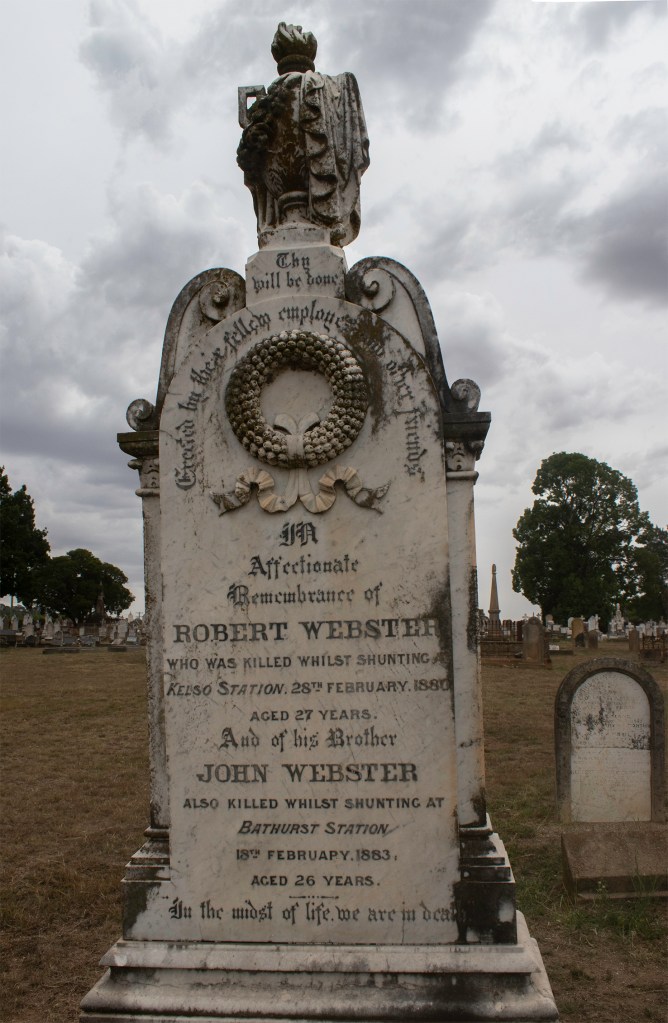
To have one son killed while working in a railway yard is unfortunate, but to have a second son die almost the same way three years later is beyond words.
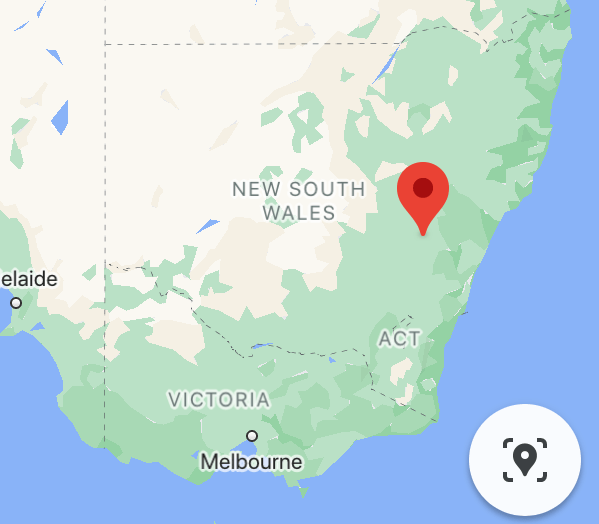
Twenty-seven-year old Robert Webster was a shunter at the Kelso railway station, the other side of the Macquarie River to the Bathurst Station, New South Wales, in 1880.
The station had only been open for five years when Robert tried to jump from one moving wagon to another but fell onto the line.
The wheels of the wagon crushed his thigh. He was brought to Bathurst where the leg was amputated.
“…the man got into such a weak state from loss of blood and exhaustion, that he did not rally, and died this evening,” reported the Sydney Morning Herald.
“No blame is attached to any one except the man himself, who met with the accident through his own carelessness.
Sydney morning herald
With those words farewelling her son, his family surely could not have felt comfortable with his younger brother John working on the nearby Bathurst Railway Station.
Their fears would have been realized when, a week short of the three-year anniversary of Robert’s death, John also made a fatal mistake at work.
He accidentally uncoupled two wagons, and got between them to reattach them – while the train was still in motion.
A wheel went over his arm, crushing it and his leg stopped the truck, breaking it badly.
Both arm and leg were amputated, but again, the injuries were too much and he died.
SOURCES: Albury Banner and Wodonga Express (NSW : 1881 – 1938) Friday 23 February 1883 p 15
The Sydney Morning Herald (NSW : 1842 – 1954) Monday 1 March 1880 p 5

