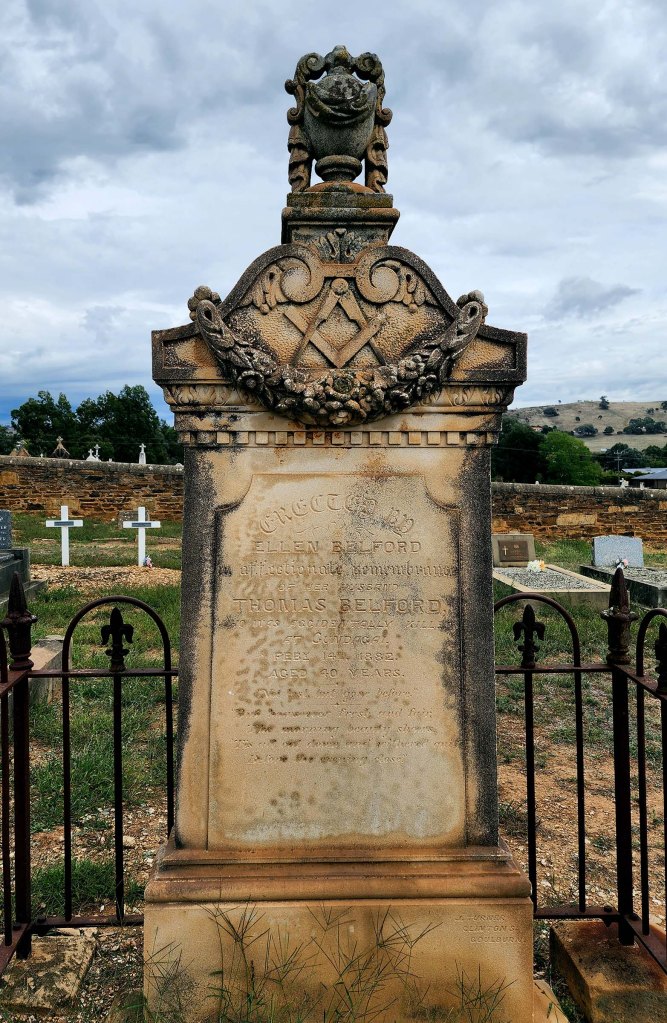
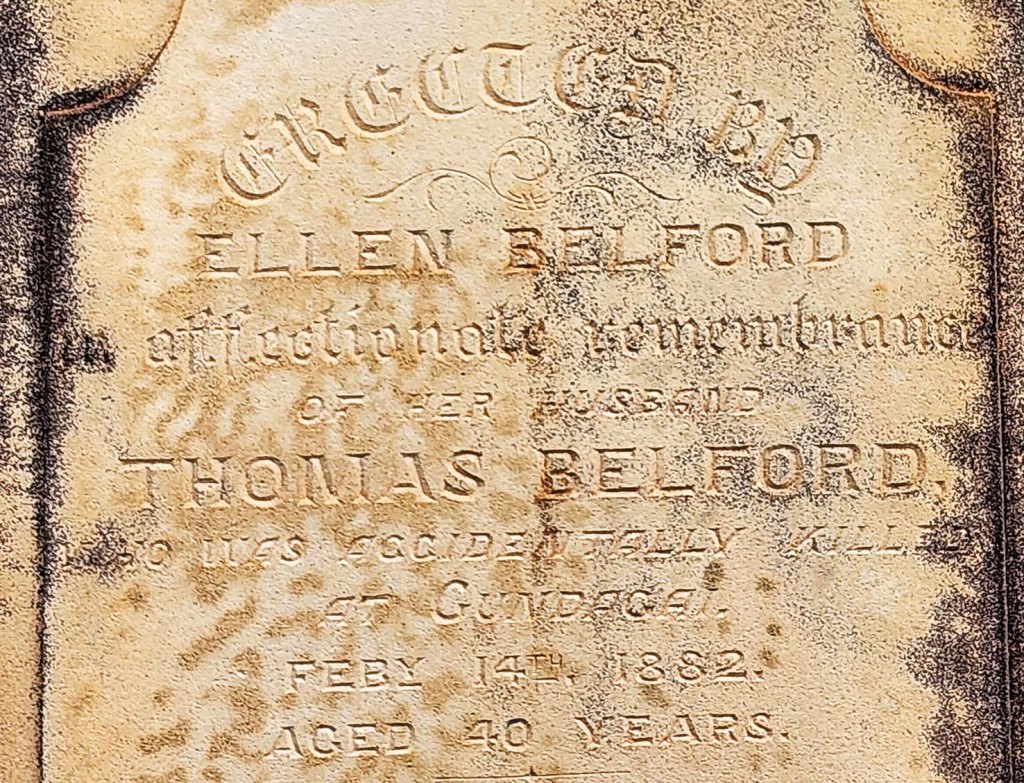
1882 – Thirty-three year old Irishman Thomas Belford, sodawater and cordial manu-
facturer was thrown from his cart after a morning of delivering his product to four hotels in Gundagai.
Unfortunately, and possibly contributing to his death, he had imbibed at a number of them and his sobriety was questioned at the subsequent inquiry.
Belford was accompanied by his worker John Alt, who said his boss had taken the reins from him as they left the final hotel, and so was driving from the near (not usual) side of the horse.
They were on a spring cart, a two-wheeled vehicle popular because they gave a smooth ride for deliveries, but often had no driver’s seat.
It was about 1pm, and the rig had safely forded the main river and gone across the flats, but when they approached the creek, Belford pulled the wrong rein, which sent the horse veering too far to the left, and its wheel went onto the bank on the side of the roadway, completing turning over the vehicle.
“The boy sprang clear of the cart and horse, and thus escaped uninjured, but deceased received a fall which caused his death within about thirty minutes.’’
GUndagai Times
The inquest’s jury returned a verdict of accidental death.
The local Masonic chapter gathered at Fry’s hotel, and proceeded to Belford’s residence, where chaplain Reverend Williams read a portion of the Masonic funeral service. Belford had apparently often expressed his wish that the Masonic Brotherhood would, at his death, read their “solemn and sublime burial service” at his grave.
The remains were then removed to St. John’s Church, where a portion of the Church of England burial service was read.
After this the remains were accompanied to the cemetery by one of the longest processions seen in Gundagai, where the Reverend read the remainder of the Anglican service, before putting on full Masonic regalia, as Chaplain of the Excelsior Lodge, and reading the concluding portions of its burial service.
Then “according to ancient custom, each brother deposited a sprig of acacia—the emblem of friendship—on the coffin, and, with a silent farewell, the mournful proceedings terminated”.
Source: The Gundagai Times and Tumut, Adelong and Murrumbidgee District Advertiser, Friday 17 February 1882, p2

