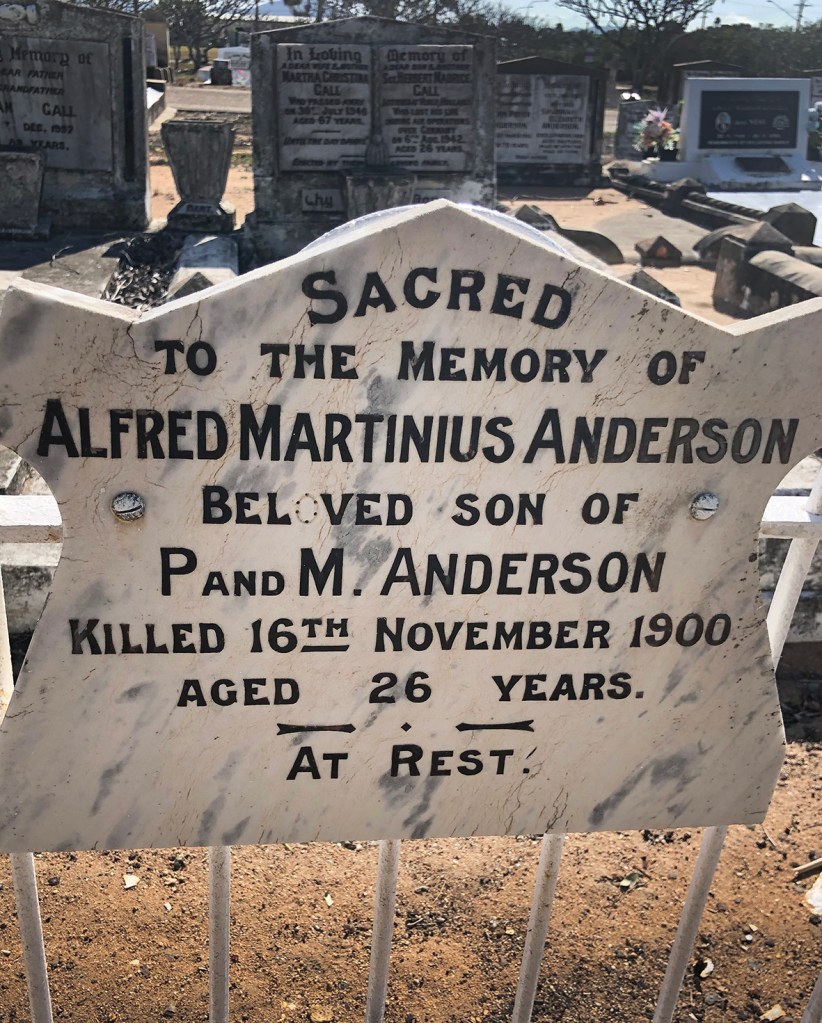
1901 – Charles Beckman declared he did not kill Alfred Anderson, even as he stood on the gallows at Brisbane’s Boggo Road Gaol awaiting hanging for the crime.
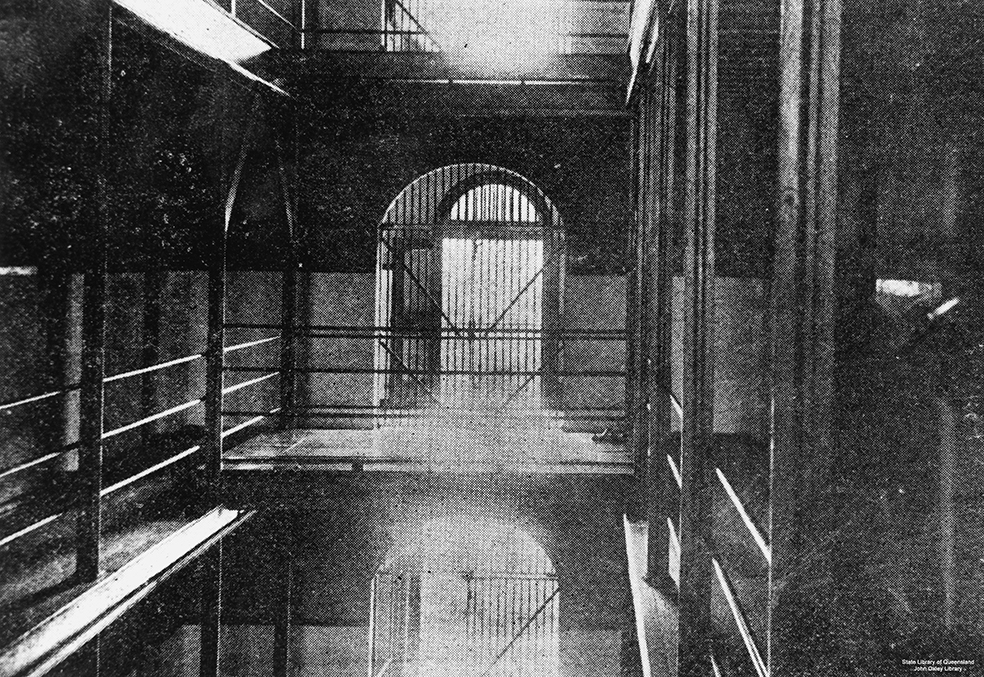
“I am now going to my end, and before my Maker, and I know it, I know this is my end, and again I say I am innocent of this charge.
“That’s all I have to say.”
It was indeed – the bolt was drawn, and the body soon hung lifeless, newspapers reported.
German-born Beckman, in his early 40s, and Anderson, 26, had left the Don River region near Bowen, Queensland to go prospecting in November, 1900.
Anderson’s brother received a letter from him on November 24, with no indication of anything being amiss.
In early January concern grew at Anderson’s prolonged absence, but it wasn’t until Beckman was seen at Euri Creek with Anderson’s horses and some of his belongings on January 19 that suspicions were heightened. By then, he had actually been dead for three days.
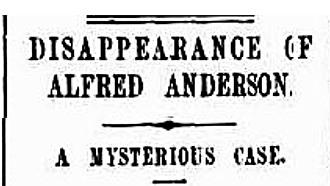
One of the horses belonged to Anderson’s father, who pressed a charge of horse stealing, and a warrant was issued for Beckman’s arrest.
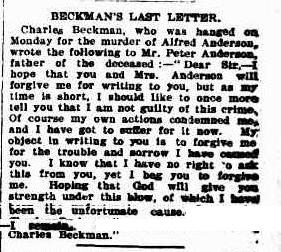
On January 26, Beckman’s gun and swag, together with a letter saying that he had accidentally shot Anderson and was going to drown himself, was found on the Bowen jetty.
But the authorities thought this was merely a ruse – and they were right. The harbour was dragged for the body, but the on-land search continued and Beckman was tracked down on February 1 near the Don River by Bowen’s Sergeant Denis Kean (also Keene), a constable and two Aboriginal trackers.
When Beckman led police to Anderson’s body, near Macarthy Creek on February 7, it was buried in rocks.
It showed no signs of a gunshot wound – but the severed skull was smashed into 15 or 16 pieces, depending on various accounts.
Before the Bowen Magistrates Court, Beckman was said to have accidentally shot Anderson while coming down a hill.
“He attributed his not reporting the accident to cowardice.”
Dr Browne, who had attended the body as it lay at the creek, told the court he was of opinion that the skull was broken by a blunt instrument.
“He considered that the prisoner was in perfect health and quite sane.”
Beckman was committed for trial on the 4th March next.
Here is Beckman’s account of what happened
” Anderson and I left our camp in the morning. Anderson was carrying a double-barelled gun.
We travelled to the head of the creek. When returning the country was very rough, and Anderson, not being accustomed to rough country, I took the gun from him.
“We travelled some distance down the creek, when Anderson slipped and fell I laughed at him. Young Anderson remarked, ‘You need not laugh at me; it may come to your turn very soon.’
“We only travelled a few yards, when I slipped and fell. The stock of the gun struck the rocks, which caused it to explode, striking Anderson in the back of the head and killing him instantly, he was only three or four feet from me at the time.
“I was nearly mad at what had occurred. I went to the camp and got a bag and covered the body over with it.
Charles BEckman
“I remained with the body all night and buried it in the creek. I got my horses and cleared out.
“I was… for three or four days before I got to a house, or it may be a week. Sometimes I go mad for three or four days at a time… I intended to give myself up to the police, hut I had not the heart to do so.
“I brought a gun to the jetty wharf and I intended to commit suicide but my heart failed me.
At the conclusion of his trial, Beckman said: “I should only like to say that Alfred Anderson and I have been on very intimate terms for five or six years, and there is no earthly reason whatever to gain by the death of Alfred Anderson.
“I had no reason whatever to commit such a crime intentionally.
“I here declare before all that I am not guilty of this charge intentionally.
“The prisoner, whose voice had faltered towards the end of his remarks, now buried his face in his hands, evidently completely overcome.”
Beckman, who was married with three children, was hanged on May 13, 1901, still protesting his innocence. He was one of 42 people to face capital punishment at Boggo Road Gaol.
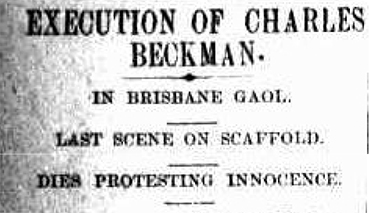
Sources: The Bundaberg Mail and Burnett Advertiser, Friday 22 February 1901, p 2
The North Queensland Register, Monday 28 January 1901, p 53, Monday 11 March 1901 , p 26
Warwick Examiner and Times, Wednesday 15 May 1901, p 3
The Morning Bulletin, Wednesday February 6, 1901, p 6
Darling Downs Gazette, Wednesday 15 May 190, p 4
 Way to go Australia
Hi Sharyn,
Beckman was “hanged” on May 13, not hung.
Cheers,
David
LikeLike
Damn. I know that! Thanks, it’s fixed. And thanks for reading.
LikeLike