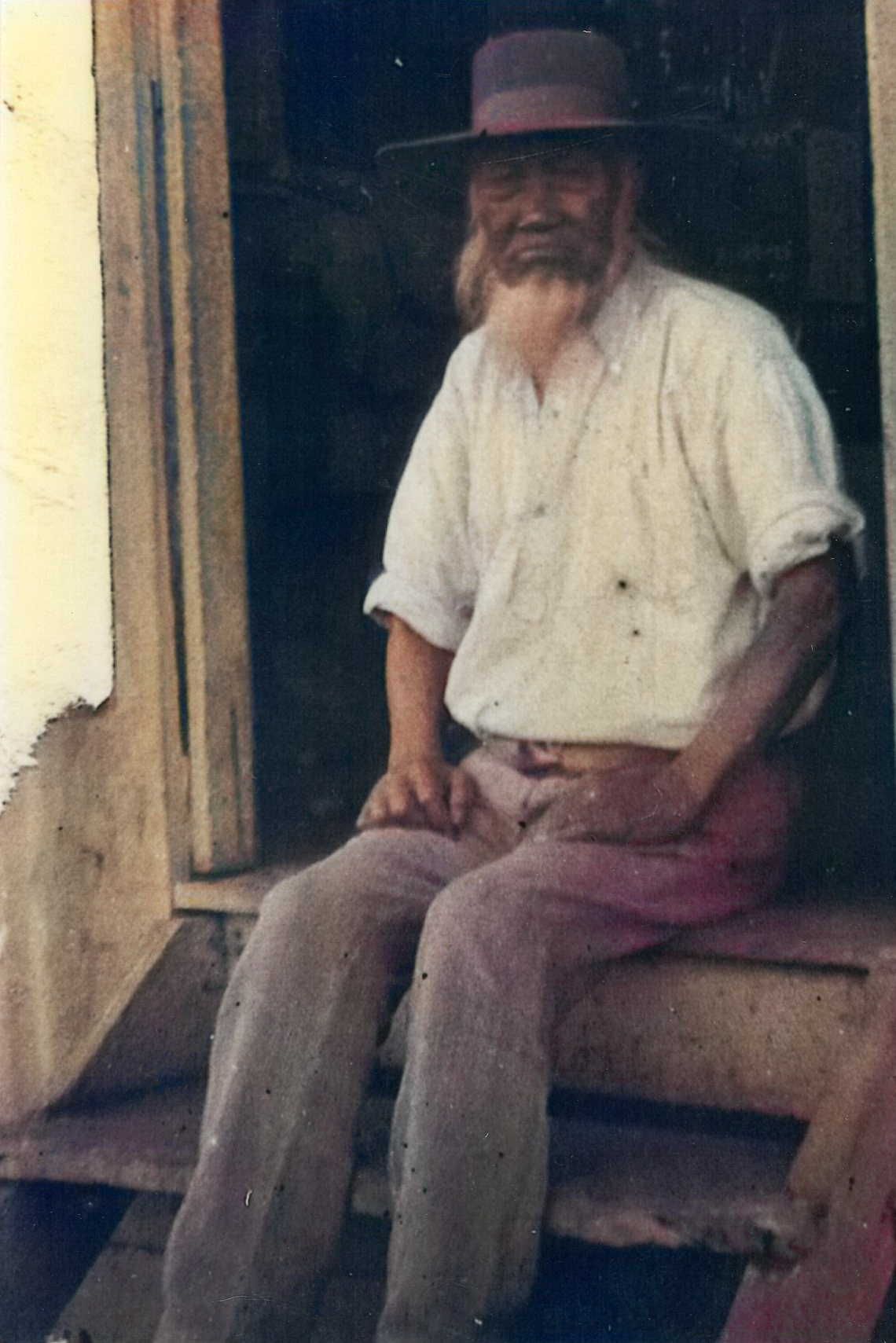
The age of 108 claimed on Daniel Hawke’s headstone in the Emu Park cemetery is impressive. Indeed, newspapers across the country described the man as Queensland’s and possibly Australia’s oldest man when he died in 1925.
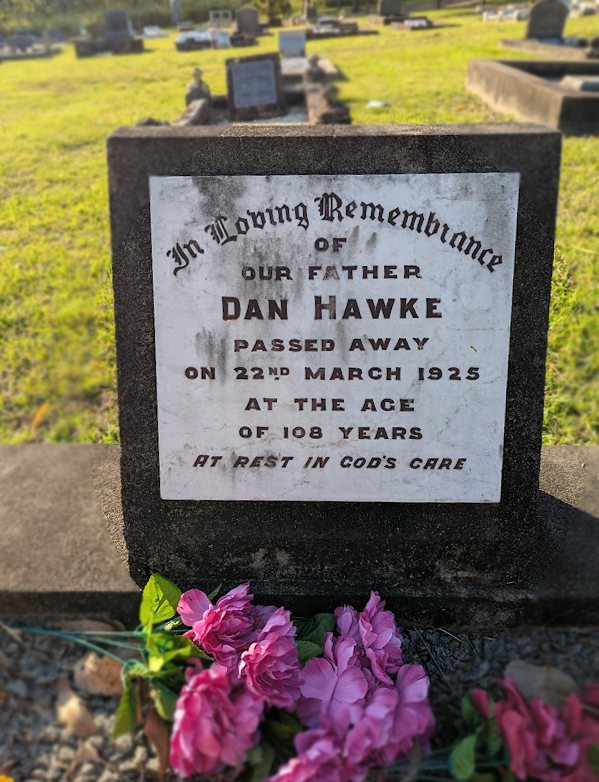
But his coffin, buried deep beneath, was inscribed with the number 105. This still may have kept him his title if it was true.
Today, internet searches reveal a more likely birthdate of May 24, 1837, which meant he was 87 when he died on March 22, 1925.
It is possible Hawke, who was Mongolian, did not know his age himself . He claimed to have been born a year before Queen Victoria (also born May 24, but in 1819).
At the time, Rockhampton’s Evening News newspaper wanted to verify the figure with his sons and daughters at his funeral at Emu Park, Central Queensland, but claimed to be unable to do so as “none of them turned up”.
However, three of his six immediate descendants did turn up at the Supreme Court where they contested his will, which had left his estate to the widow who nursed him in his final year.
Daniel Hawke (also Hawk) was said by at least one newspaper to have been born in Hong Kong, but most simply described him as being of “celestial origin”. However, his obituaries preferred to point out his staunch patriotism, which is interesting in an era where the “yellow peril’’ was strongly feared.

The articles go to great lengths to labour the fact that Hawke always proudly asserted that he “was a British subject, and what he treasured above everything was a Union Jack flag, in which his remains were laid to rest”.
“The late Mr Hawke was a staunch patriot and had no time for anyone who was disloyal and unpatriotic. He showed his patriotism in the war period.’’
Morning Bulletin
By the time he died, no-one alive remembered when he first came to Central Queensland, but it appears to have been in his 30s. That would correlate with the 1840s, too early for Australia’s first gold rushes when many Asians came to Australia.
Hawke was married and survived by four sons and two daughters – all well into a mature age at his passing. A wife is mentioned in one of the court stories, saying that she was a shopkeeper in Rockhampton, who had left him after having their sixth child. She had died about four years earlier.
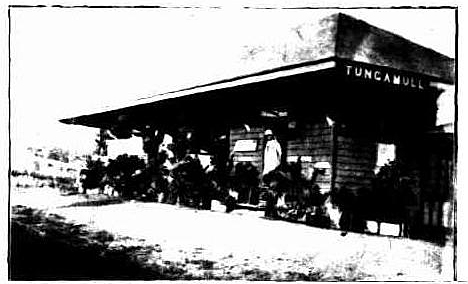
Hawke also was a businessman. In the early 1880s, when he would have been in his early 60s, his Morning Bulletin obituary says he was a store keeper and hotelkeeper at Tungamull, on the coach line between Rockhampton (population 15,000) and the coastal settlement variously known as Sandhills or Emu Park. The hotel was known as the Halfway Hotel, due to its location between the two centres.
His business prospered when a railway line was built between the two centres. The 47 kilometre-long line, which opened on December 22, 1888, served to bring thousands of hot Rockhampton residents for a day’s jaunt at the ocean.
Hawke’s businesses adjoined the railway station, and were often mentioned in newspaper articles as a community meeting place. He also got mentions when he was charged with supplying alcohol to an Aboriginal woman (the case did not proceed) and once when he refused hospitality to the hotel licencing inspector (but his licence was still renewed). He appears to have remained working at his hotel until about two years before he retired.
His obituaries, as they tend to do, lauded his character.
“During the big drought in the eighties he displayed a signboard outside his shop stating that rations could be obtained free by any man who was out of work. It is known that he has had a doctor sent to poor families and paid the expenses out of his own pocket…
“In the old coaching days it was a great treat for the travellers to sit round his fire and listen to yarns told by him…
“He is said to have put £500 in notes away in a box for 30 years, and on going to get them found they had decayed and were so much dust…
…they read.
Newpaper articles about Hawke’s long and generous life soon turned to tales of family fracture when it became known that he had left his remaining estate/cash to the middle-aged widow who had nursed him for the final year or so of his life.
One newspaper article claimed Grace Luine had become his mistress as he neared 100 years of age, but the court case stories mostly described her as simply a friend. He had moved to her home 18 months before he died, having sold his business and apparently not wanting to live with any of his children. His relationship with them was described as “contentious”.
He had some kind of “accident” about a year before he died, and required nursing for the rest of his life.
Three of his six offspring, William Hawke, 77, Sophia Splayford, 72 and Ada Rebecca Kennedy, 69, brought the case, which was heard over three days in the Supreme Court. The children believed Mrs Luine had an undue influence over their father, and that he did not know or approve of the contents of the will.
There were claims of Hawke having dementia, of Mrs Luine having saved Hawke from being strangled and thrown into a creek by his son Alex 25 years earlier and thus earning his ever-lasting gratitude, of the estate being dwindled by money paid to Mrs Luine for his care.
It was also revealed that another son, Henry, had tried to gain his father’s riches by inducing an insurance agent to convince his father to make a will in his favour.
The court found in favour of the Hawke descendents making the claim, saying they only sought to be recognised in the dying wishes of their father, as the estate had dwindled considerably by then, partly thanks to court fees, partly due to loans or money Hawke had paid to Mrs Luine.
The jury found that Mrs Luine appeared to have looked after the old man well, but that Dan Hawke was not of sound mind when he made the will leaving money to her, and that he had been unduly influenced.
Ekeing out the character of a man through newspaper reports of a court case so many years later is difficult, and it is impossible to know what kind of a man Dan Hawke really was. He may not have been 108, but that big number reflects the possibly larger-than-life impact his life had on the community.

Sources: Daily Examiner, Saturday 28 March 1925, p4
Evening News, Tuesday 24 March 1925, p4, Friday 10 July 1925, p4, Friday 18 September 1925, p5
Morning Bulletin, Wednesday 25 March 1925, p12, Tuesday 22 September 1925, p8, Friday 18 September 1925, p5, Tuesday 22 September 1925, p8
The Richmond River Express and Casino Kyogle Advertiser, Friday 25 September 1925 , p3
 Way to go Australia